Epic fantasy is the genre's default setting and the reason people picture doorstoppers when you say "fantasy." Continents, dynasties, wars that run for decades, casts you need a chart for. These are the books that become somebody's entire personality for a year, and they earn it.
What makes a book epic isn't length, though length usually follows. It's scope and stakes: the story is about a civilization rather than a person, the cast is an ensemble rather than a hero, and the consequences reach further than any one character can see. That structure is why these books get long — you cannot do that work in three hundred pages.
One thing we'll flag that most lists won't, because it's the single most useful fact before you commit: whether the series is actually finished. A few of the most beloved epics on this page have been unfinished for over a decade, and knowing that going in is the difference between a great reading experience and a grudge. We've said so in each entry.
Sixteen books, sorted by era and ambition.
The foundations
Where the mode was built. Everything below this section is in conversation with these four, whether it means to be or not.
The book that made this a genre rather than a handful of scattered romances. Slower than the films by design — the long walk through the Shire and Bree is building something the payoff depends on. Complete, obviously, and still the standard.
By
Robert Jordan
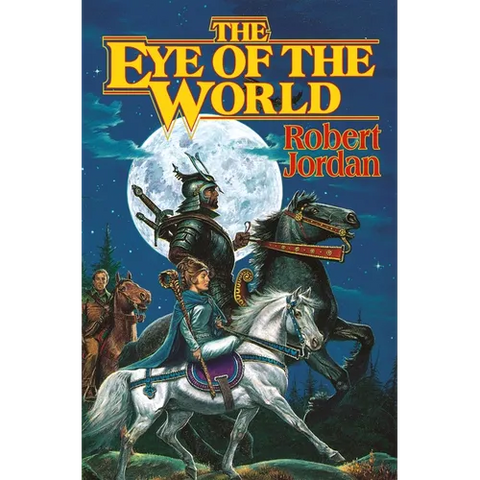
The opening of The Wheel of Time, fourteen volumes that defined the doorstopper era. Jordan starts in deliberately Tolkien-shaped territory and spends a decade building something enormous and entirely his own. Complete — Brandon Sanderson finished the final three books from Jordan's notes after his death in 2007.
By
Tad Williams
A kitchen boy in a castle, a dying king, and a war that unfolds with unusual patience. Memory, Sorrow and Thorn is the missing link between Tolkien and everything modern — George R.R. Martin has been explicit that it was a direct influence on A Song of Ice and Fire. Complete, and criminally underread.
The bastard son of a prince is raised in the stables and trained quietly as a royal assassin. Hobb writes interiority better than anyone in epic fantasy, and the Farseer books are famous for how thoroughly they put a reader through it. The wider Realm of the Elderlings runs sixteen books and is complete.
The modern giants
The four series that have dominated the conversation for the last thirty years. Two of them are finished.
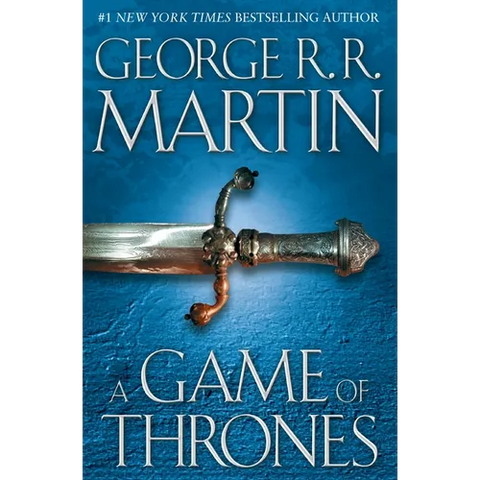
Noble houses maneuvering for a throne while something considerably worse gathers in the north. Martin's innovation was applying the ruthlessness of actual medieval history to a genre built on moral clarity, and fantasy has never fully recovered. Book one is superb. The series is unfinished and has been since 2011 — go in knowing that.
The first volume of The Stormlight Archive, set on a world scoured by supernatural storms. The planned ten-book series is only half written, but the first five-book arc concluded in December 2024 — which means there's a complete, self-contained story waiting right now. The best moment to start there has ever been.
The opening of the Malazan Book of the Fallen, which drops you into an ongoing imperial conflict with no exposition whatsoever and expects you to keep up. Erikson trained as an archaeologist and anthropologist, and the series treats empire, atrocity, and compassion with a seriousness almost nothing else attempts. Ten books, complete, and famously the hardest entry point in fantasy.
An innkeeper who used to be a legend tells his own story over three days. The prose is genuinely beautiful and the framing device is used properly. Unfinished — book two arrived in 2011 and there has been no third since, which is worth weighing before you fall in love with it. Book one is a complete enough experience that many readers consider it worth the risk.
Epic fantasy that broke the mold
The last decade of the form, from writers who took the scale and threw out most of the assumptions underneath it. The strongest section on this page.
By
N. K. Jemisin
A world that ends periodically, a mother searching for her stolen daughter across it, and a magic system built on geology and systemic oppression. Jemisin won the Hugo for Best Novel three years running for this trilogy, the first author ever to do it. Structurally audacious — the second-person sections are doing something, and it pays off. Complete.
A war orphan tests into an elite military academy and finds a power older and worse than the politics around her. Kuang draws directly on twentieth-century Chinese history including its atrocities, and the novel's final third is deliberate and unsparing. Complete trilogy. Not a comfortable read.
A peasant girl takes her dead brother's name and his destiny in fourteenth-century China, in a reimagining of the founding of the Ming dynasty. Fierce about gender, ambition, and what a person will burn to become someone. Duology, complete.
Rival clans in a mid-century Asian-inspired city fight over magical jade that grants power to those trained to use it. Structurally a crime family saga — think Godfather with martial arts and mineral rights — and one of the best-plotted fantasy series of the last decade. Trilogy, complete.
Epic scope without the fourteen-book commitment
For readers who want the scale but not the decade. Everything here delivers a full epic in one book or a short series.
Queens, dragons, and a thousand-year threat resurfacing, in a single enormous standalone. Delivers the entire doorstopper experience with a complete ending and no sequel obligation. Rare, and welcome.
A broken former courtier takes a quiet tutoring post and finds himself at the center of a curse on a royal house. Bujold writes theology and politics with unusual intelligence, and this stands alone completely — the companion novels are separate stories in the same world.
A blind man raised as a vessel for a vengeful god, a sea captain smuggling him toward a holy city, and a solar eclipse everything has been building toward. Pre-Columbian Americas-inspired epic with genuinely fresh mythology, and a Hugo and Nebula finalist. Trilogy, complete.
A con artist in eighteenth-century Cairo accidentally summons a djinn warrior and is pulled into a hidden city of six tribes and a great deal of unresolved history. Islamic and Middle Eastern mythology used with real depth. Trilogy, complete.
Where to go from here
For the whole map, our 50 best fantasy books of all time is sorted by subgenre. If you'd rather not commit to a series at all, the best standalone fantasy books is built entirely from complete, self-contained novels.
And if the political brutality of Martin or Kuang is the appeal, the best grimdark fantasy books takes that considerably further. For the two biggest shared universes in the genre, we've mapped Sanderson's Cosmere and all 41 Discworld novels in reading order.