"Literary fantasy" is mostly a shelving decision. Kazuo Ishiguro wrote a novel with ogres, a dragon, and a knight of the Round Table in it, and bookshops put it on the fiction table. Susanna Clarke wrote a novel with footnotes about English magic, and it went in the genre aisle. The books have more in common with each other than either has with most of what surrounds it.
When Ishiguro publicly worried that readers might dismiss his dragon novel as fantasy, Ursula K. Le Guin — who had spent a career watching the same condescension applied to her own work — responded with some sharpness. The exchange was instructive, because it made the thing visible: the border is patrolled, and it's patrolled from both sides.
That said, there is a real difference in what these books ask of you. Denser prose, slower pacing, ambiguity left standing rather than resolved, and endings that decline to explain themselves. If that's what you want, this is the shelf. Sixteen books, from the foundations to the writers who wandered in from outside.
The foundations
Four books that established fantasy could be written as literature, decades before anyone was arguing about whether it counted.
Published in 1926, and a strange, beautiful novel about a respectable trading town whose citizens have spent generations pretending the faerie country next door doesn't exist — until the fairy fruit starts getting smuggled in again. Neil Gaiman has championed it for decades, and it reads as far more modern than its date suggests. A genuine lost classic.
A 1924 novel about a village that asks its lord for a magical ruler, and gets exactly what it asked for. Dunsany's prose is closer to poetry than narrative and he influenced nearly everyone who came after — Tolkien, Lovecraft, Le Guin, Gaiman. Short, and unlike anything written since.
By
Mervyn Peake
The first Gormenghast novel: an enormous crumbling castle governed entirely by meaningless ritual, and a kitchen boy who intends to climb. There's almost no magic in it and it's unmistakably fantasy — Peake was an illustrator, and the prose builds the castle brick by grotesque brick. Demanding, and one of the great achievements of twentieth-century English fiction.
The Arthurian legend retold with comedy, sorrow, and deep unease about power — White was writing through the Second World War, and the book's argument about might and right is not decorative. Stranger and sadder than its reputation, and the source of most of what people think they know about Arthur.
Magical realism
The tradition that got the literary respect fantasy was denied, largely by arriving from Latin America with different critical credentials. Same tools, better table.
Seven generations of the Buendía family in the town of Macondo, told in a register where the miraculous and the mundane carry precisely equal weight — a woman ascends to heaven while folding laundry and nobody comments. The book that made magical realism a global movement, and the Nobel followed.
The devil arrives in Soviet Moscow with a retinue including an enormous talking cat, while a parallel narrative retells the trial of Christ. Written in secret through the 1930s under Stalin, unpublished for decades after Bulgakov's death, and one of the funniest and most furious novels of the century.
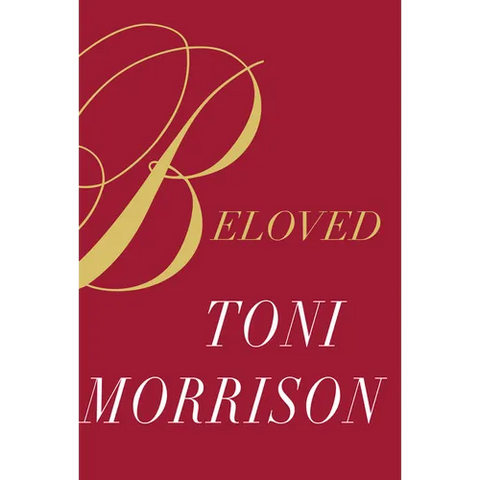
A formerly enslaved woman in Ohio is visited by a presence connected to the most unbearable act of her life. Won the Pulitzer and sits at the center of Morrison's Nobel — and it is unambiguously a ghost story, whatever shelf it's on. The past arriving in physical form to be reckoned with.
By
Ben Okri
A spirit-child in a Nigerian ghetto who keeps choosing to stay alive despite the pull of the world he came from. Won the Booker Prize in 1991. Dense, hallucinatory, and built on Yoruba cosmology rather than European folklore, which makes it genuinely disorienting in the best way.
The modern literary fantasists
Writers working squarely inside the genre while doing everything the literary shelf is supposed to be for.
English magic returns during the Napoleonic Wars, in a thousand-page novel written in flawless nineteenth-century prose with hundreds of footnotes documenting a magical history that never happened. Ten years in the writing, a Hugo winner, and utterly without precedent or successor.
A man lives in an infinite house of statues and tides, keeps careful journals, and believes there are only two people in the world. Under 250 pages, nothing like her first novel, and best read knowing as little as possible. Won the Women's Prize for Fiction.
Five generations of a family living in a house at the edge of somewhere else, in a novel that has been quietly regarded as a masterpiece since 1981 without ever finding a mass audience. Slow, enormous, and the book its devotees press on people with genuine urgency. Harold Bloom rated it among the finest American novels of the century.
By
Angela Carter
Ten fairy tales rewritten as adult fiction — Bluebeard, Beauty and the Beast, Little Red Riding Hood — with the sex and violence restored and the moral instruction stripped out. Carter's prose is extraordinary and the collection reshaped how a generation of writers approached folklore.
Literary writers who wandered in
Novelists shelved firmly in general fiction who wrote fantasy anyway, and mostly declined to call it that.
By
Kazuo Ishiguro
An elderly couple travel across a post-Arthurian Britain where a mist makes everyone forget their own past, including what was done to secure the peace they live in. Ogres, a dragon, and a Nobel laureate quietly asking whether forgetting is mercy or cowardice. The book that started the argument in this post's opening.
Abraham Lincoln's eleven-year-old son dies, and the graveyard's population of stranded spirits narrate what happens next. Won the Booker Prize. Formally unlike anything else — assembled from fragments and invented historical citations — and unexpectedly moving.
By
Haruki Murakami
A teenage runaway and an elderly man who talks to cats, in parallel narratives that converge without ever quite explaining themselves. Talking cats, fish falling from the sky, and Murakami's refusal to resolve anything — a good entry point to a writer who has been doing this for forty years.
By
Téa Obreht
A young doctor in a Balkan country pieces together her grandfather's death through two stories he told her, both of which involve the impossible. Won the Orange Prize when Obreht was twenty-five. Folklore and recent war handled with equal seriousness.
Where to go from here
For the wider genre, our 50 best fantasy books of all time is sorted by subgenre. If it's the self-contained novel that appeals, the best standalone fantasy books overlaps here considerably — literary fantasy rarely comes in trilogies.
And if this section has you wanting the older canon these books are arguing with, our western canon list covers the tradition and is honest about who assembled it.