The word "canon" comes from the Greek kanon, meaning a measuring rod — and it was originally used for the list of books the early Church accepted as scripture. Literature borrowed the term, and it kept the implication: these are the works everything else gets measured against.
Which raises the obvious question nobody asks often enough. Measured by whom?
There's no committee. No vote was ever held. The Western canon is what happened when generations of critics, universities, and publishers kept assigning, printing, and arguing about the same books until the list calcified. Harold Bloom's 1994 book The Western Canon — the most famous attempt to define it — was itself a polemic, written in fury against critics who wanted to widen the list. That's worth knowing: the canon has never been settled. It's an argument that's been running for a century, and reading it as a fixed inheritance rather than an ongoing fight misses most of what makes it interesting.
So here's our version: twenty-four books, arranged by the tradition they belong to rather than ranked. Every one of them is genuinely load-bearing — later writers read these and wrote differently afterward. We've also been honest at the end about what the list leaves out and why, because a canon that can't account for its own gaps isn't a canon; it's just a syllabus.
One quick note before we start: if you arrived looking for cowboys, you want our best western novels list instead. Different kind of western entirely.
The ancient foundations
Everything downstream is in conversation with these. Read one, and you'll start noticing its shape in books written three thousand years later.
By
Homer
A soldier spends ten years trying to get home from a war, and the journey becomes the template for every journey narrative since. Composed for oral performance around the eighth century BC, and still startlingly readable — Emily Wilson's recent translation in particular moves like a novel. If you read one ancient text, this is the one.
Not the whole Trojan War but a few weeks of it, centered on one man's rage and what it costs everyone around him. Bleaker and stranger than the Odyssey, and the foundational Western text on war, honor, and mortality. Homer grants full humanity to both sides, which was not obvious then and apparently still isn't.
Rome's national epic, written to give an empire a founding myth, and unusually alert to the cost of that project — Virgil keeps letting the conquered speak. Dante thought highly enough of it to make Virgil his guide through Hell.
A journey through Hell, Purgatory, and Paradise, written in the Tuscan vernacular rather than Latin, which effectively invented modern Italian along the way. The Inferno is the famous part and deservedly so, but the whole is one of the most ambitious structures anyone has attempted in verse.
Where the novel begins
The transition from epic and drama to the form that would dominate the next four centuries. These are the books where you can watch the novel being invented in real time.
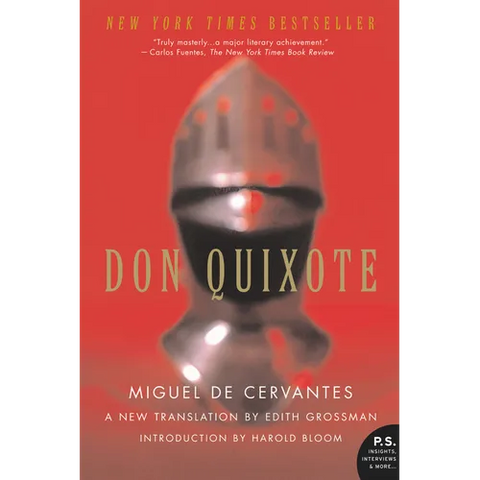
An elderly gentleman reads too many chivalric romances and decides to become a knight. Published in two parts in 1605 and 1615, and routinely called the first modern novel — partly because it's the first book that's aware it's a book. Funnier than its reputation and sadder than you expect.
The play that arguably invented the modern interior life — a character who thinks his way through the entire drama and keeps changing his mind in front of you. Bloom built much of his canon argument around the claim that Shakespeare made us recognizable to ourselves, and Hamlet is his central evidence.
By
John Milton
The Fall of Man in twelve books of blank verse, written by a blind republican who had backed the losing side of a revolution. Milton's Satan is the most compelling character in the poem, which has troubled readers for three hundred years — Blake said Milton was of the Devil's party without knowing it.
A castaway rebuilds civilization from salvage on a desert island. Published in 1719, frequently called the first English novel, and the origin of an entire genre. Also, read now, an unmistakable document of the colonial mindset — which is part of why it's worth reading rather than a reason to skip it.
The nineteenth century: the novel at full power
The century the form took over. If the canon has a center of gravity, it's here — and this is the section where a modern reader is most likely to find something they genuinely love rather than merely respect.
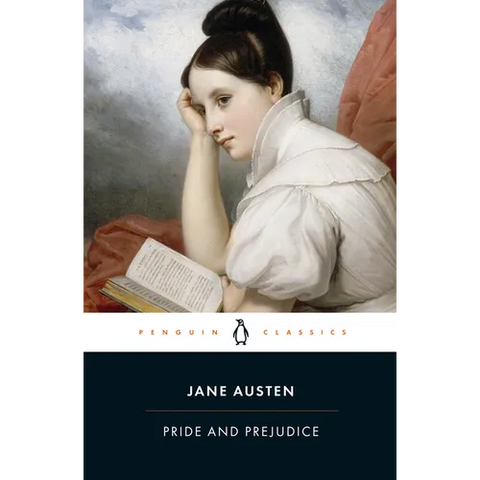
A comedy of manners that is also a precise economic analysis of what marriage meant for women with no property rights. Austen's free indirect style — slipping between narrator and character without announcing it — was a genuine technical innovation that novelists have used ever since.
By
George Eliot
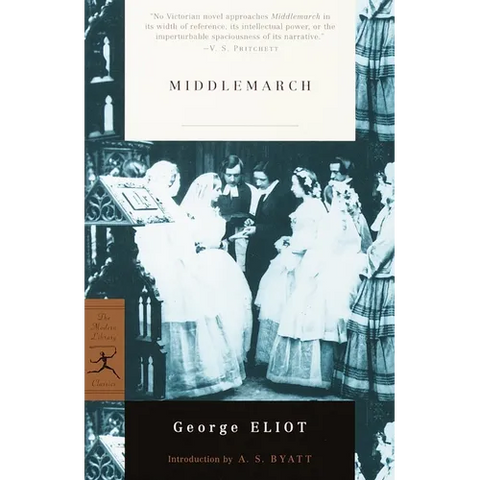
A provincial English town, several intersecting lives, and the most psychologically acute novel in English. Virginia Woolf called it one of the few English novels written for grown-up people, which remains the best short description of it. Long, slow, and worth every hour.
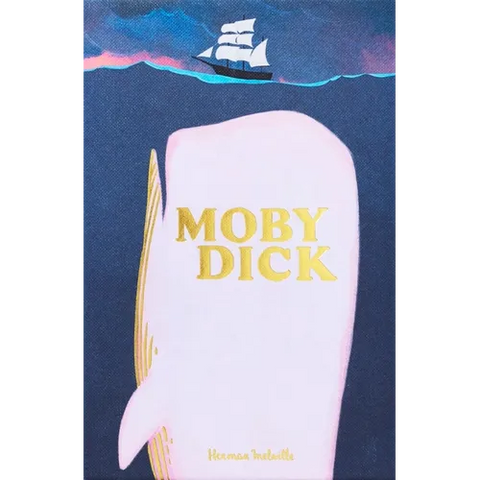
A whaling voyage, a captain's obsession, and a narrator who cannot stop digressing about the anatomy of whales. Commercially disastrous on publication and now the great American novel by most accounts. Funnier than you've been led to believe.
By
Fyodor Dostoevsky
A former student murders a pawnbroker to prove a theory about himself and spends the rest of the novel coming apart. Dostoevsky's real subject is what happens inside a person who has reasoned his way to something monstrous.
A woman leaves her marriage and a society that permits everything except being seen doing it. Tolstoy moves between drawing rooms, farms, and battlefields with total command, and the novel is unusually generous — nobody in it is a villain, which makes what happens worse.
A provincial doctor's wife ruins herself pursuing the life she read about in novels. Flaubert was prosecuted for obscenity and acquitted, and his obsessive sentence-level precision essentially created literary realism as a discipline.
Modernism breaks the form
The early twentieth century, when a generation of writers decided the novel's inherited machinery couldn't hold what they wanted to say and took it apart. Difficult by design — but the difficulty is the argument, not an obstacle to it.
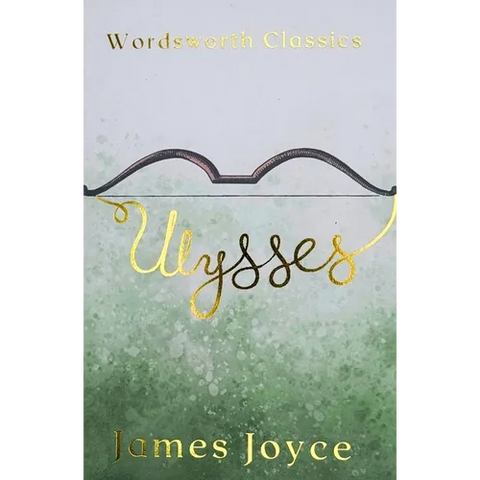
One day in Dublin, June 16th 1904, rendered in a different style every chapter. Notoriously difficult and genuinely funny once you stop treating it as an exam. Read it with a guide beside you — everyone does, including professors.
A single day in London, moving between a woman preparing for a party and a shell-shocked veteran she never meets. The most accessible entry point to modernism, and Woolf's handling of consciousness moving through time has never been bettered.
By
Marcel Proust
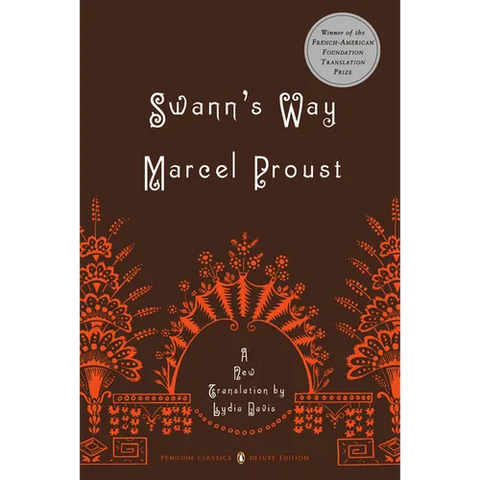
The first volume of a seven-part novel about memory, and the origin of the most famous pastry in literature. Proust's sentences are long enough to get lost in, which is the intended effect — he's reproducing the actual texture of remembering.
By
Franz Kafka
A man is arrested for a crime nobody will name by an authority he can never reach. Published against Kafka's instructions after his death, and the reason we have the word "Kafkaesque." Reads less like allegory every year.
A Mississippi family's collapse told in four voices, the first belonging to a man who does not experience time in order. The hardest book on this list and the one most likely to change how you think prose can work.
The twentieth century canon
The books that entered the canon within living memory, largely by being impossible to ignore. Several of these were controversial additions and are now completely settled — which is the canon working as intended.
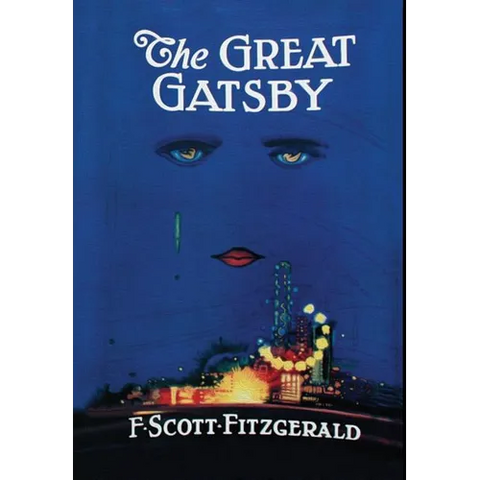
A man reinvents himself entirely in pursuit of a woman and a version of America that was never available. Sold poorly in Fitzgerald's lifetime, and now the shortest, sharpest statement of what the American dream costs.
By
Ralph Ellison
An unnamed narrator moves through the segregated South, Harlem, and radical politics, and is seen accurately by nobody at any stage. Won the National Book Award in 1953 and stands as one of the two or three greatest American novels of its century — formally dazzling, and very funny in places.
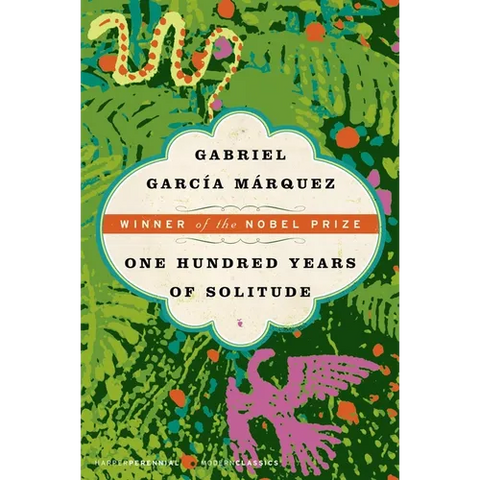
Seven generations of the Buendía family in the town of Macondo, told in a register where the miraculous and the ordinary carry equal weight. The book that made magical realism a global literary movement, and the Nobel Prize followed.
By
Chinua Achebe
A respected man in an Igbo community in the 1890s, and the arrival of British colonial administration and missionaries. Achebe wrote it in direct response to European novels about Africa, and it is now the most widely read African novel in the world. A canon entry that expanded what the canon was for.
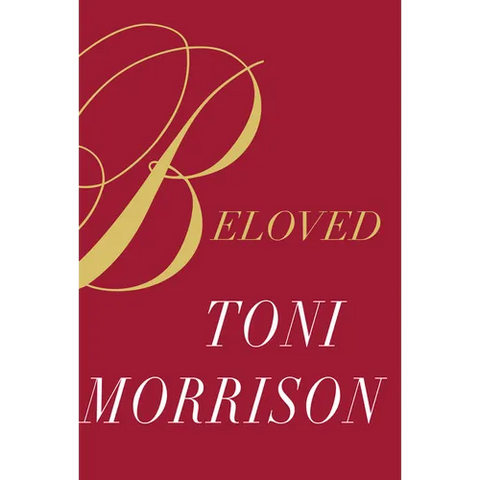
A formerly enslaved woman in Ohio is visited by a presence connected to the most unbearable act of her life. Won the Pulitzer, central to Morrison's Nobel, and by now unarguably canonical — a useful reminder that the list is still being written.
What this list leaves out
Any canon is a set of choices, and pretending otherwise is how you end up with a list that looks like it descended from heaven rather than from a few hundred professors.
The obvious gap is geographic. "Western" here means Europe and its offshoots, which means an enormous amount of the best literature ever written — The Tale of Genji, written by a Japanese noblewoman around 1010 and arguably the first novel anywhere; the Sanskrit epics; the Chinese classics; the whole Arabic tradition — sits outside the frame by definition. That's not a flaw in the list so much as a limit built into the label.
The second gap is who was allowed to write. For most of the period covered here, literacy, leisure, and publication were rationed by class, sex, and race. The canon's demographics are less a verdict on talent than a record of who had a room, an income, and a printer willing to take the risk. Austen, Eliot, and Woolf are on this list; the number of their contemporaries who never got the chance is unknowable and large.
None of which makes these books less worth reading. They earned their place by influence — later writers read them and wrote differently — and that influence is a matter of record rather than taste. But a reader who knows how the list was assembled reads it better than one who takes it as handed down.
Where to go from here
If the twentieth-century section is where you'd like to go deeper, our African American fiction list covers Ellison and Morrison alongside the tradition they belong to. For the modernists' successors, the best sci-fi books includes several novels doing genuinely canonical work in a genre the canon ignored. And if any of these turn out to be a slog, our guide to finishing a difficult book exists for exactly this shelf.
Think we've got it wrong? Good — that's the correct response to a canon. Tell us what's missing.