A quick note on how this list is built, because it affects what's on it. "African American literature" gets shelved as a category, and categories imply a genre — a specialized shelf you visit for a specific reason. That framing does the books a disservice. Several of the novels below are, without qualification, among the best American novels ever written. Not the best Black American novels. The best ones.
What you can actually trace across this list is an arc, and it's worth watching for as you read. The early writers were working under enormous pressure to argue for their own humanity, and that pressure shows in the books — sometimes as fury, sometimes as extraordinary formal invention. The later ones inherited that ground and got to do something else with it: comedy, horror, space opera, satire. A century of writers getting progressively freer to write whatever they wanted. That's the story this shelf tells.
Twenty-eight books, sorted by era and kind. Start anywhere.
The foundations: Harlem Renaissance to midcentury
Where the tradition gets built. These are demanding books written under conditions that were considerably more demanding, and all five reshaped American fiction on their way out.
Janie Crawford returns to her Florida town after twenty years and tells her friend everything that happened. Written in seven weeks in 1937, dismissed by many of Hurston's contemporaries for its refusal to be political enough, out of print for decades, and now widely considered one of the great American novels. The prose is extraordinary and the ending is unforgettable.
Two childhood friends, both light-skinned enough to pass as white, meet again as adults — one living as Black, one not. Barely 100 pages, published in 1929, and almost unbearably tense. A short, sharp, perfectly constructed novel about performance and risk.
By
Jean Toomer
A 1923 collage of stories, sketches, and poems moving between rural Georgia and urban Washington, and the most formally radical book of the Harlem Renaissance. Difficult, beautiful, and unlike anything published before or since — Toomer essentially invented a form and then walked away from writing.
By
Richard Wright
Bigger Thomas, a young man in 1930s Chicago, commits a crime and the novel refuses every opportunity to make him sympathetic. Wright's point was that a reader's discomfort was the entire argument. Brutal, hugely controversial on publication in 1940, and enormously influential on everything that followed.
By
Ralph Ellison
An unnamed narrator moves from the segregated South to Harlem, through college, communism, and a race riot, and is seen accurately by no one at any point. Won the National Book Award in 1953 and remains one of the two or three greatest American novels of the twentieth century. Ambitious, funny, furious, and formally dazzling.
The canon: Baldwin, Morrison, Walker
Three writers who between them defined the second half of the century. Morrison won the Nobel Prize; Baldwin should have. If you're building a shelf, this section is the shelf.
By
James Baldwin
Baldwin's first novel, largely autobiographical, following a Harlem teenager and the storefront church that shapes and constrains his family. The prose carries the cadence of the pulpit Baldwin grew up in, and the book is as good on faith as anything in American fiction.
An American in Paris, engaged to a woman, falls in love with an Italian bartender and cannot survive his own shame about it. Published in 1956, when Baldwin's publisher urged him to burn it. Short, devastating, and one of the essential novels of gay literature.
A young woman in Harlem fights to free her wrongly imprisoned fiancé before their child is born. Baldwin at his warmest and most tender, which somehow makes the injustice at the center land harder.
By
Toni Morrison
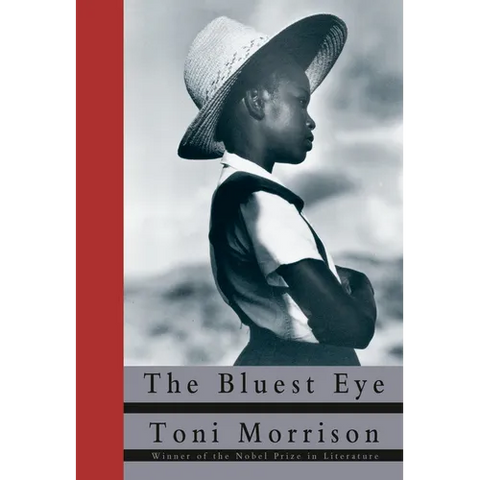
Morrison's first novel, about a young Black girl who prays for blue eyes, and about the community that fails her. Structurally daring for a debut and unflinching about the machinery that produces self-hatred. Start here if you're new to Morrison.
By
Toni Morrison
A man called Milkman Dead traces his family's history southward and finds something closer to myth than genealogy. Winner of the National Book Critics Circle Award, and the novel Morrison herself often pointed to. The most purely enjoyable of her books.
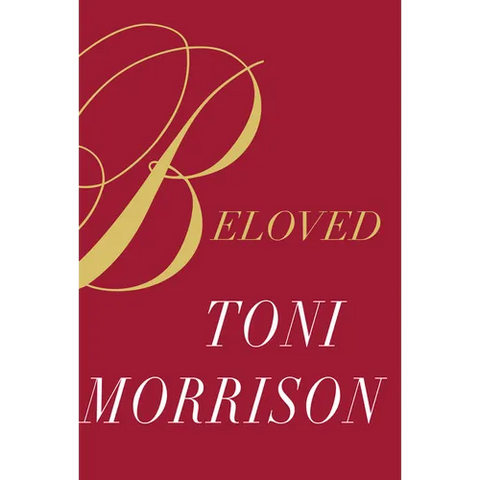
A formerly enslaved woman in Ohio is visited by a presence connected to the most unbearable act of her life. Winner of the Pulitzer Prize and central to Morrison's Nobel. It is a difficult book and it is worth every page — the greatest American novel of the last fifty years, in our opinion.
Told in letters, following Celie across forty years of abuse, separation, and eventual self-possession in rural Georgia. Won both the Pulitzer and the National Book Award in 1983. Harrowing in its first half and genuinely joyful by its end, which is a very hard thing to pull off.
Contemporary fiction worth reading now
The current generation, and a genuinely extraordinary run of books over the last decade. Several of these will be on lists like this one in fifty years.
By
Colson Whitehead
Whitehead makes the railroad literal — an actual train beneath the South — and uses it to move a young woman named Cora through a series of states that each represent a different American approach to the same problem. Won the Pulitzer and the National Book Award. Whitehead has since won a second Pulitzer for The Nickel Boys.
Two half-sisters in eighteenth-century Ghana — one married to a slaver, one sold into slavery — and then a chapter for each descendant across three hundred years. A debut novel with the scope of a career's work, and each chapter is a complete short story.
By
Paul Beatty
A satire in which a Black man in Los Angeles attempts to reinstate segregation and acquire a slave, and which is genuinely one of the funniest novels of the century. Won the Booker Prize in 2016, the first American novel to do so. Ferociously smart and not remotely careful.
A family drives across Mississippi to collect a father from Parchman prison, accompanied by the dead. Won Ward her second National Book Award, making her the first woman to win the fiction prize twice. Lyrical, haunted, and rooted deeply in place.
Twin sisters run away from their Louisiana town at sixteen; one returns, one spends her life passing as white. A direct descendant of Nella Larsen's Passing, updated across generations, and enormously readable.
Huckleberry Finn retold from Jim's perspective, revealing a man who has been managing his own presentation for the entire original novel. Won the National Book Award and the Pulitzer Prize, and it's the rare literary event that fully deserves the noise. Furious, funny, and formally brilliant.
Black speculative fiction and horror
The section that most often gets left off lists like this, which is strange, because it contains some of the most inventive work being done in any genre. Octavia Butler alone reshaped science fiction.
By
Octavia Butler
A Black woman in 1976 Los Angeles is repeatedly pulled back to a Maryland plantation, where she has to keep a white ancestor alive in order to exist. Butler called it a grim fantasy rather than science fiction, and it does something no historical novel can — it makes the past a place a modern reader has to physically survive. The best entry point to Butler.
A young woman with an unusual condition builds a new belief system while walking north through a collapsing, climate-ravaged California. Written in 1993 and set in the 2020s, and its reputation has grown steadily for reasons that are not comfortable.
By
N. K. Jemisin
A world that periodically ends, a mother searching for her daughter across it, and a magic system built on geology and oppression. Jemisin won the Hugo Award for Best Novel three years running for this trilogy — the first author ever to do it. One of the great achievements in modern fantasy.
By
Victor Lavalle
A novella that takes one of H.P. Lovecraft's most viciously racist stories and retells it from the perspective of a young Black man in 1920s Harlem. LaValle turns Lovecraft's own machinery against him, and the result is both a great horror story and a pointed act of literary reclamation.
In 1920s Georgia, a small band of resistance fighters hunt the literal monsters wearing Klan robes. A novella that is somehow pulpy, furious, and formally controlled all at once. Fast, violent, and one of the most purely entertaining books on this list.
Essential nonfiction
Five books that changed how large numbers of people understood American history. Each of them is also, separately, extremely well written.
By
James Baldwin
Two essays, barely 100 pages, published in 1963 — one a letter to Baldwin's nephew, one an account of his encounter with the Nation of Islam. Probably the most influential piece of American nonfiction of the twentieth century, and the prose is simply extraordinary. If you read one book on this entire list, we might argue for this one.
By
Isabel Wilkerson
The Great Migration — six million people leaving the South between 1915 and 1970 — told through three individual lives Wilkerson followed over fifteen years of interviews. Pulitzer-winning journalist writing at the height of her powers, and it reads like a novel.
By
Ta-Nehisi Coates
A letter to the author's teenage son about living in a Black body in America, written in the wake of Ferguson and modeled openly on Baldwin. Won the National Book Award and became the defining nonfiction book of its moment.
By
Michelle Alexander
The argument that mass incarceration functions as a system of racial control comparable to the one it replaced. It reshaped criminal justice debate in the United States more than any book in decades, and the case is built carefully enough that it's worth engaging with even where you'd push back.
By
Bryan Stevenson
A young lawyer founds the Equal Justice Initiative and takes on the case of a man on Alabama's death row for a murder he plainly did not commit. Part memoir, part legal thriller, and one of the very few books on this subject that leaves readers hopeful rather than flattened.
More reading
If the speculative section was the surprise, our best sci-fi books of all time covers more of that ground, and the best horror books picks up where LaValle and Clark leave off. For the historical material underneath the nonfiction section, the best western novels includes several histories of who the American frontier actually belonged to.
We've kept this list to twenty-eight, which means we've left out a great deal — Gwendolyn Brooks, August Wilson, Edward P. Jones, Jamaica Kincaid, and plenty more. If there's something you think should be here, tell us. We'd like to make this list longer.