Horror is the most unfairly dismissed genre in fiction, and we'd like to make a case for it before the list starts. The knock against horror is that it's cheap — jump scares in prose, gore for its own sake, nothing underneath. But the best horror novels are doing something almost nothing else in literature attempts: they take a fear that's usually too diffuse or too embarrassing to name — grief, isolation, the body betraying you, the suspicion that your own mind isn't reliable — and give it a shape you can look at directly. That's not a lesser project than literary fiction. It's frequently the same project, with better pacing.
What follows is our attempt at a genuinely useful horror list rather than a rundown of the ten most famous scary books. We've sorted it by what kind of fear you're in the mood for, because "horror" covers an enormous amount of ground — the quiet dread of a house that's slightly wrong is a completely different experience than something with teeth. Pick your flavor.
The foundations
Start here if you're new to the genre, or if you've somehow read around it for years without reading the books everything else is answering. These are the load-bearing walls — the novels modern horror is still in conversation with, and all of them hold up on their own merits rather than as historical curiosities.
By
Shirley Jackson
Four people spend a summer in a house with a reputation, and the horror comes almost entirely from what Jackson refuses to show you. The greatest haunted house novel ever written, and the template for the idea that the scariest thing in a story might be the narrator's own head. The opening and closing paragraphs are among the most quoted in the genre for good reason.
A struggling writer takes a winter caretaking job at an isolated Colorado hotel with his wife and young son, and the isolation does what isolation does. King's best novel, and considerably sadder than its reputation — it's a book about addiction, inherited violence, and a father losing a fight with himself, wearing a ghost story as a coat.
Told entirely through letters, journals, and newspaper clippings, which makes it feel oddly modern — like reading someone's found documents. The vampire novel that set every rule the genre has been breaking ever since, and genuinely tense in its first hundred pages in a way most people don't expect from a book this old.
Written by a teenager, and still the sharpest book anyone has produced about creating something and then refusing responsibility for it. The horror isn't the creature — it's Victor, and the way he keeps making the same choice. Foundational to horror and science fiction simultaneously.
By
William Peter Blatty
A mother watches her twelve-year-old daughter change into something unrecognizable while doctors run out of explanations. Blatty was a serious Catholic writing seriously about faith and doubt, which is why the book lands harder than the endless imitations it spawned. Still genuinely upsetting fifty years on.
Quiet dread
No monsters, or none you can point at. This is horror that works by accumulation — a wrongness that builds so gradually you don't notice how tense you've become until you put the book down. Our favorite corner of the genre, and the one we most often press on people who claim they don't like horror.
Two sisters live in near-total isolation in a house the nearby village despises them for, and the novel slowly reveals why. Jackson's last book, narrated by one of the strangest and most compelling voices in American fiction. Barely violent, deeply unsettling, and short enough to read in one sitting — which is exactly how it should be read.
By
John Langan
Two widowers bond over fishing trips, and one of them hears a story about a stretch of creek nobody goes to anymore. What starts as a quiet novel about grief opens into something enormous and cosmic without ever losing its footing. One of the most acclaimed horror novels of the last decade and still criminally underread.
By
Paul Tremblay
A family agrees to let a reality television crew film their teenage daughter's apparent possession, narrated years later by her younger sister. Tremblay keeps the supernatural explanation and the psychiatric one perfectly balanced the entire way through, and the last twenty pages have ruined a lot of people's evenings.
Full-contact horror
The other end of the spectrum: books that are not being subtle and have no interest in being subtle. Big monsters, real body horror, genuine viciousness. These are the ones to hand someone who says nothing scares them anymore.
By
Clive Barker
The novella that became Hellraiser: a man solves a puzzle box that opens onto beings who make no distinction between pleasure and agony. Barker writes physical horror better than almost anyone, with a lushness that makes it worse rather than easier. Short, vicious, unforgettable.
By
Cormac McCarthy
Not marketed as horror, absolutely functions as horror. A teenage runaway falls in with a scalp-hunting gang on the 1850s Texas-Mexico border, and the violence that follows is relentless and rendered in some of the most beautiful prose in American literature — a combination that makes it far more disturbing than gore alone could. Judge Holden is one of the great monsters in fiction.
By
Nick Cutter
A scoutmaster and five boys on a remote island encounter a starving stranger, and things go extremely wrong extremely fast. Widely considered one of the most viscerally upsetting horror novels of the last twenty years — Stephen King himself called it hard to put down. Do not read it while eating.
Based loosely on a real 1965 crime, and one of the few horror novels that's genuinely difficult to recommend without a warning. There's nothing supernatural in it — the horror is entirely what ordinary people prove capable of, and how many of them simply watch. Devastating, and deliberately so.
Modern horror worth your time
The genre is in the middle of a real creative surge right now, and these are the recent books we think will still be on lists like this in thirty years. If your mental picture of horror is stuck in the paperback racks of 1987, start here.
A young socialite travels to a decaying mansion in the Mexican countryside to check on her cousin, who has written a frightening letter. A gothic novel with genuinely fresh ideas underneath the familiar architecture, and a horror element that's difficult to describe without spoiling. One of the biggest crossover hits the genre has had in years.
By
Stephen Graham Jones
Four Blackfeet men are pursued by something that has been waiting a decade to settle a debt from a hunt they shouldn't have taken part in. Jones is one of the most inventive horror writers working, and this is his most accessible entry point — a revenge story, a slasher, and a serious book about cultural inheritance all at once.
By
N. K. Jemisin
Not shelved as horror, but a world that periodically ends and a mother searching for her daughter across it produces something closer to sustained dread than most books that are. Included here because readers who like horror's emotional register keep discovering it and thanking us. Hugo Award winner and the start of a trilogy that won three years running.
By
Agustina Bazterrica
In a world where animal meat has become poisonous, society has adapted in the most obvious and monstrous way available. Cold, controlled, and unrelenting — a satire that never once winks at you, which is precisely what makes it unbearable. Short, and you will not forget it.
In the theocratic settlement of Bethel, a young woman of mixed blood finds her dead mother's journals in the forbidden Darkwood, and learns what the men who founded her community actually did to build it. Folk horror with genuine teeth about religious control, purity, and who a righteous society decides is expendable. A debut, and one of the most striking horror novels of the last decade.
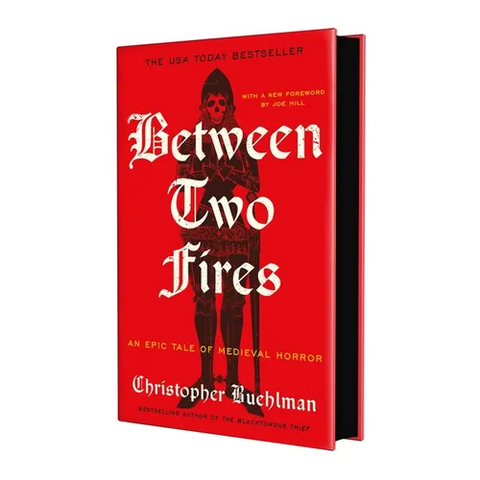
A disgraced knight escorts a strange young girl across a France ravaged by the Black Death, while something far worse than plague moves through the countryside. Historical horror with genuine beauty in it, and one of the most beloved horror novels of the last fifteen years among people who read a lot of horror.
Where to go from here
If this list has you in an autumnal mood, we've got you covered from a few directions — the best gothic novels for the older, more atmospheric end of the tradition, and spooky books for Halloween if you want the season's mood without necessarily wanting to be genuinely frightened.
And if a book on this list turns out not to be for you, that's completely fine — horror is the genre where knowing when to put a book down matters most. Some of these are heavy on purpose. There's no prize for finishing something that's actively ruining your week.