The Second World War has produced more books than any other event in human history — somewhere north of sixty thousand, by most estimates, and more arriving every year. Which creates an unusual problem for a reader: the issue isn't finding something to read; it's that the sheer volume makes it almost impossible to know where to start, and a great deal of what's out there is repetitive, hagiographic, or written to flatter rather than inform.
So this list is organized by what you actually want out of the reading. Some people want one good book that explains the whole thing. Some want a single campaign in forensic detail. Some want to know what it was like to be there, which is a completely different question than what happened. And some want fiction, which has told certain truths about that war more effectively than any history has managed.
A note before the list: we've kept the Holocaust in its own section, and we've written those entries plainly. There's a register of enthusiasm appropriate to a book about tank warfare that is not appropriate there, and we'd rather be direct than clever about it.
Where to start: single-volume WWII histories
Single-volume histories of the entire war, for readers who want the whole shape of it before going deeper. Each of these is a serious commitment in length, and each is genuinely readable — no small achievement given the scope.
By
Antony Beevor
The best single-volume history of the war for a general reader, from the historian who has done more than anyone to make this period readable without simplifying it. Beevor moves between the strategic picture and the individual experience better than almost anyone writing, and he's unsparing about the conduct of every side, including the winning one. If you read one book on this list, make it this one.
By
Max Hastings
Hastings' great strength is refusing to let the war become a story about generals — this is a global history built substantially from the accounts of ordinary soldiers and civilians on every side, and it's deliberately structured to correct the Anglo-American tilt most popular histories carry. A superb companion to Beevor rather than a competitor.
By
William L. Shirer
Written by an American journalist who reported from Berlin through the 1930s and watched the regime consolidate in person, then built the book from captured German documents after the war. Dated in places by seventy years of subsequent scholarship, and still unmatched for the sense of having been in the room. A genuine landmark.
Going deeper: WWII battle and campaign histories
Where the subject gets properly absorbing: single battles and theaters covered in the kind of detail that makes the strategic picture make sense. These are the books that turn a name on a map into something you understand.
By
Antony Beevor
The book that made Beevor's reputation, and still the definitive account of the battle that broke the German army in the east. Built substantially from Soviet archives that had only recently opened, and harrowing in a way few histories manage — the winter chapters in particular are difficult to read and impossible to put down.
By
Antony Beevor
Not just the landings but the brutal, grinding campaign that followed through the Normandy hedgerows, which most accounts skip past. Beevor is honest about Allied failures, civilian casualties, and the gap between the invasion as remembered and the invasion as fought.
By
Rick Atkinson
The first volume of Atkinson's Liberation Trilogy, covering the North African campaign, and a Pulitzer Prize winner. Atkinson writes American forces learning to fight the hard way — the early defeats, the incompetence, the improvement — with a novelist's eye and a historian's rigor. The trilogy as a whole is one of the great achievements in modern military history.
By
Cornelius Ryan
Published in 1959, built from interviews with hundreds of participants on both sides while they were still alive to give them, and structured hour by hour through June 6th. The book that essentially invented the modern narrative style for military history, and it still reads with extraordinary immediacy.
By
Erik Larson
Churchill's first year as prime minister, told through the Blitz and the daily texture of a city under bombardment — drawn from diaries, intelligence reports, and private papers. Larson is the most purely readable narrative historian working, and this is his most propulsive book. A good entry point for readers who find conventional military history dry.
WWII memoirs and firsthand accounts
Firsthand accounts and books built from them. These answer a different question than the campaign histories do — not what happened, but what it did to the people it happened to. Several of these are among the finest pieces of writing on this list, full stop.
By
E. B. Sledge
A Marine mortarman's memoir of Peleliu and Okinawa, written years afterward from notes kept in his pocket Bible. Widely considered the finest memoir to come out of the Pacific war, and one of the most unflinching accounts of combat ever published — Sledge is precise, unsentimental, and completely without self-mythology. Essential.
By
Stephen E. Ambrose
The story of Easy Company, 506th Regiment, from training through the end of the war in Europe, assembled from extensive interviews with the surviving men. The basis for the miniseries, and the book remains worth reading for the material the adaptation couldn't fit.
By
Laura Hillenbrand
The story of Louis Zamperini — Olympic runner, bombardier, plane crash survivor adrift on the Pacific for forty-seven days, then a prisoner of war in Japan. Hillenbrand spent seven years on the research, and the result is one of the most-read nonfiction books of the last two decades for good reason.
By
John Hersey
Originally published in 1946 as an entire issue of The New Yorker, following six survivors through the bombing and its aftermath in plain, restrained prose. It changed how Americans understood what had been done in their name, and it is still, eighty years on, one of the most important pieces of journalism ever written. Short and unforgettable.
By
Paul Fussell
A literary scholar who fought as an infantry officer in France dismantles the sanitized version of the war he lived through — the euphemism, the propaganda, the gap between the official story and the actual experience. Angry, brilliant, and the necessary corrective to every account that makes it sound noble.
Books about the Holocaust
The Holocaust has its own enormous literature, and these are the books we'd point anyone toward first. They are difficult, and they should be. We'd suggest reading them one at a time, with space in between.
By
Elie Wiesel
Wiesel's account of Auschwitz and Buchenwald as a teenager, and of losing his family and his faith. Short, spare, and one of the essential books of the twentieth century.
By
Levi Primo Levi,
Primo Levi,
Primo Levi
Levi was a chemist from Turin deported to Auschwitz in 1944. He wrote about it with a scientist's precision and an almost unbearable restraint, and the result is perhaps the clearest account we have of what the camps did to the people inside them. Frequently paired with its sequel, The Truce.
Written in hiding in Amsterdam between 1942 and 1944 by a girl between the ages of thirteen and fifteen. Read as an adult, it is a far more complex and interior book than its reputation as a school text suggests.
By
Viktor E. Frankl
A psychiatrist's account of survival in four camps, and the framework he built afterward from what he observed about meaning and endurance. One of the most widely read books of the last century.
By
Christopher R. Browning
A study of Reserve Police Battalion 101 — middle-aged German men, not fanatics or career soldiers, who became mass murderers in occupied Poland. Browning's careful reconstruction of how that happened is among the most important and most disturbing works of Holocaust scholarship, precisely because it refuses to treat the perpetrators as a separate species.
WWII historical fiction worth reading
Some things about that war have been better served by novels than by histories — the absurdity, the moral vertigo, the experience of being a very small person inside an enormous machine. These are the ones worth your time.
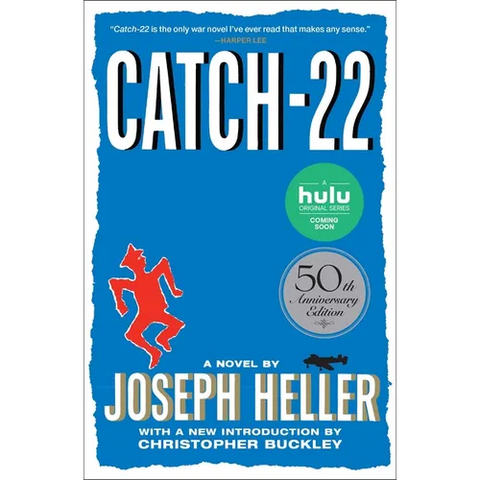
A bomber squadron in the Mediterranean, and a bureaucratic logic that makes escape structurally impossible. The funniest novel ever written about war and, past a certain point, one of the bleakest — the comedy curdles deliberately as it goes. Heller flew sixty combat missions himself.
By
Kurt Vonnegut
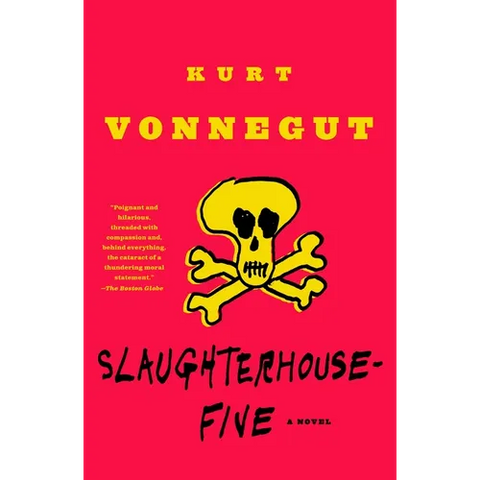
Vonnegut survived the firebombing of Dresden as a prisoner of war in an underground meat locker, and spent twenty-three years failing to write about it directly before producing this — a short, fractured, time-slipping novel that gets at the event by refusing to approach it head-on. One of the great American novels.
By
Vasily Grossman
A Soviet war correspondent's enormous novel of Stalingrad and the families orbiting it, deliberately structured as a twentieth-century War and Peace and equally willing to indict Soviet totalitarianism as Nazi. The manuscript was seized by the KGB in 1961; it reached the West only decades later. One of the great novels of the century, and still under-read in English.
By
Irene Nemirovsky
Written in occupied France in 1941-42 as the events were happening, and left unfinished when Némirovsky was deported to Auschwitz, where she died. The manuscript sat unread in a suitcase for over sixty years before her daughter opened it. What survives is an extraordinary novel about the fall of France and the improvised, compromised business of living under occupation.
A blind French girl and a German boy conscripted for his talent with radios, converging on the walled city of Saint-Malo. A Pulitzer Prize winner, and the most accessible book on this list — if the histories feel forbidding, this is a good way into the period.
More war history worth reading
If this is your period, our 10 best books about the Vietnam War covers the conflict that followed and the very different literature it produced. And for the classics side of the shelf, 20 western canon books has plenty of ground to cover.
If you've got a recommendation we've missed — particularly memoirs, which are where the real discoveries tend to hide — we want to hear it.