

You finish a book, feel genuinely moved by it, recommend it to three people — and six months later you can produce roughly one sentence about what was in it. This is nearly universal, and it is not a memory defect. It's the predictable result of how most of us read: continuously, passively, without ever once stopping to retrieve anything.
The good news is that the research on what actually improves retention is unusually detailed, and most of it takes minutes rather than hours. The less good news is that the two techniques nearly everyone uses are, according to that same research, close to worthless. We'll get to those.
There's also a second half to this that most articles handle badly — the visualization question, and specifically what to do if you're one of the people for whom "just picture the scene" has never worked and never will. That turns out to have an actual name and an actual explanation.
Why you forget what you read
Reading feels like absorbing. It isn't. Reading is recognition — your eye passes over a sentence, your brain confirms it makes sense, and you move on. Recognition is easy, and it feels like learning, which is exactly the problem. The sensation of fluent, effortless reading is almost perfectly uncorrelated with whether anything is being retained.
Memory is built by retrieval, not exposure. Every time you pull something back out of your head, the pathway to it strengthens. Every time you merely look at it again, very little happens. So a person who reads a chapter once and then spends ninety seconds trying to remember what was in it will out-remember a person who reads the same chapter three times — and the second person will feel much more confident, right up until they're asked.
The two things everyone does that barely work
A landmark 2013 review in Psychological Science in the Public Interest assessed ten common study techniques against the evidence. Two of the most popular came out near the bottom.
Highlighting. Rated low utility. Highlighting feels productive because it involves a decision and leaves a visible trace, but the act of marking a passage does almost nothing to encode it. Worse, it can hurt — highlighting focuses attention on individual sentences at the expense of the connections between them, which is usually where the actual argument lives.
Rereading. Also rated low utility, and by far the most common technique there is. Rereading increases familiarity, and familiarity feels like knowledge. It's why you can reread a page four times, feel increasingly certain you've got it, and be unable to summarize it thirty seconds later.
Neither is worthless — highlighting is fine as a bookmarking system for passages you intend to come back to and do something with. The failure is in treating either one as the thing itself.
What actually works
Close the book and say what happened. This is retrieval practice, the highest-rated technique in the research, and the entire method is: stop at the end of a chapter, look away, and recall what was in it. Out loud, in your head, doesn't matter. Ninety seconds. You will be uncomfortable at how little comes back the first few times, and that discomfort is the mechanism working — the effort of retrieval is what builds the memory, so the harder it is, the more it does.
Write a bad summary. Two or three sentences in your own words after each chapter, or after each sitting. The critical part is your own words — copying a line from the text does nothing, because paraphrasing forces you to have actually understood the thing. It should feel clumsy. Elegance is not the point.
Space it out. Memory is strengthened by revisiting material after you've begun to forget it, not before. So a quick review a day later, then a week later, is worth far more than reading the same passage three times in one sitting. This is why cramming produces a passing grade and nothing that survives the weekend.
Tell someone about it. The single most effective version of all of the above, because explaining forces retrieval, paraphrasing, and structuring simultaneously — and a listener asking "wait, why?" will find the holes in your understanding faster than you will.
Connect it to something you already know. New information attaches to existing information. A book about supply chains that you connect to your own job will stick; the same book absorbed as free-floating facts will not. This is also why the fifth book you read on a subject is easier than the first — you've built somewhere for it to go.
On visualization, and the readers who can't
Here's where most advice on this subject goes wrong.
Standard guidance says to pause at descriptive passages and picture the scene in detail — imagine the faces, the room, the light. For most readers that's reasonable, if slightly laborious. But for a meaningful minority of people, it's an instruction to do something they are constitutionally incapable of.
The condition is called aphantasia, named in 2015 by neurologist Adam Zeman at the University of Exeter after a patient who lost his mind's eye following a minor stroke. People with aphantasia cannot voluntarily generate visual mental images. Ask them to picture an apple and there is simply nothing there. Prevalence estimates range from roughly 1% for the most complete absence up to around 4% when weaker imagery is included — which means in any given book club, the odds are decent that someone has been quietly faking their way through conversations about how they pictured a character.
The genuinely interesting finding: it doesn't make people enjoy reading less. A study published in Consciousness and Cognition comparing aphantasic and non-aphantasic readers found no difference in reading enjoyment. What differed was the flavor of the experience — aphantasic readers reported less absorption in the story world and less emotional attachment to characters, and they tend to skim heavy descriptive passages, which for them are genuinely just words. Many gravitate toward plot, argument, and structure instead.
It also doesn't preclude a creative life. Glen Keane, the Disney animator who drew Ariel, has spoken publicly about having aphantasia — he can't see the drawing in his head before he makes it. Zeman has noted that novelists with aphantasia tend to build on plot rather than dense visual description.
If visualizing isn't your thing
Whether you have full aphantasia or just a faint mind's eye, the fix isn't to try harder. It's to stop optimizing for a channel you don't have and use the ones you do.
Track structure instead of scenery. Who wants what, who's in whose way, what changed this chapter. Plot and argument are memory scaffolding just as sturdy as imagery.
Externalize it. A character list, a rough family tree, a timeline on the inside cover. What other readers hold in their heads, you can hold on paper — and it works about as well.
Try audiobooks. A good narrator supplies tone, pacing, and character differentiation, which does some of the work imagery would otherwise do.
Skim the descriptions without guilt. If three paragraphs about a drawing room aren't producing anything, move on. You're not failing to read properly. You're reading the way your brain reads.
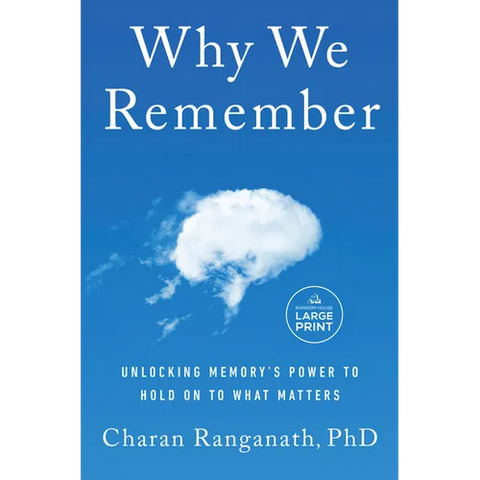
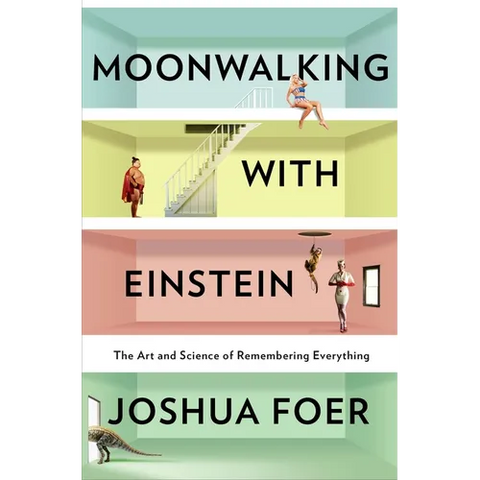
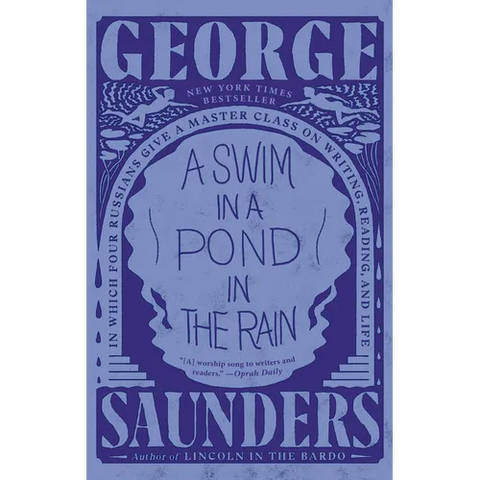
Books on memory and reading well
Where to go from here
If the problem isn't retention but simply getting to the end, our guide to finishing a difficult book covers the techniques for that. And if the book in question genuinely isn't earning the effort, our case for abandoning books guilt-free is waiting.


