Fascism is one of those words that gets used so loosely it risks becoming useless — a general-purpose insult for any authority someone dislikes. That's a genuine problem, and not only for reasons of precision. A word that means everything means nothing, and a term that can't be defined can't be recognized. So it's worth knowing that fascism does have a definition, and that historians have spent eighty years arguing it into reasonably sharp focus.
What is fascism (put simply)?
Fascism is a mass political movement that promises to restore a humiliated nation to greatness by discarding the rules — democratic, legal, and ethical — that would slow it down. Historians identify it by how it behaves rather than by what it claims to believe, because the stated beliefs change constantly and the behavior doesn't.
Robert Paxton's standard scholarly account breaks into six recurring parts:
-
A story of loss. The nation was great and has been humiliated, weakened, or stolen from — usually by an enemy within.
-
A cure of unity, energy, and purity. Stop deliberating, start acting, remove whatever is deemed impure or disloyal.
-
A genuine mass movement. Not a small conspiracy. Real people, in real numbers, who believe it.
-
Partnership with the establishment. Business leaders, media owners, and mainstream politicians who dislike the methods but assume they can use and control it. They are consistently wrong about the controlling part.
-
The end of democratic constraints. Usually accomplished legally and constitutionally, not through a dramatic coup.
-
Violence treated as cleansing. Necessary, redemptive, and exempt from the limits that apply to everyone else.
This is why judging these movements by their stated program is a category error. Fascist movements have been pro-labor and anti-labor, pro-church and anti-church, capitalist and anti-capitalist, depending on what was locally useful.
What fascism actually is: the definitive accounts
Start here. These are the books that define the term rather than deploy it, written by the historians and philosophers who have spent careers on the question. Read two of these and you'll be better equipped than most people arguing about it online.
By
Robert O. Paxton
The standard scholarly account, from the historian most responsible for how the field currently defines the term. Paxton's method is comparative and behavioral — he tracks what fascist movements have actually done across different countries and stages, from initial formation through the exercise of power, rather than taking their stated ideologies at face value. Rigorous, careful, and the single best starting point on this list.
By
Jason Stanley
A Yale philosopher's breakdown of fascist politics into recurring mechanisms — the mythic past, propaganda, anti-intellectualism, unreality, hierarchy, victimhood, law and order, and the division of a population into deserving and undeserving. Shorter and more accessible than Paxton, and organized as a set of tools rather than a history.
By
Madeleine Albright
A former Secretary of State — and a refugee from both Nazi and Communist occupation as a child — surveys twentieth-century fascism and the conditions under which it recurs. More personal and less academic than the others here, which makes it a good entry point for readers who find scholarly history heavy going.
By
Kevin Passmore
Around 150 pages, and the most efficient overview available of what fascism was, where it came from, and why historians still argue about how to define it. Passmore is good on the movements outside Italy and Germany that get left out of most popular accounts, and honest about the places where the scholarly consensus breaks down. The right book if you want the shape of the whole debate before committing to a longer history.
How it happened: fascism and the historical record
The most useful correction to the idea that fascism arrives with obvious warning signs is reading how it actually arrived — gradually, legally, and with a great deal of ordinary cooperation. These are the books about that process.
By
Hannah Arendt,
Anne Applebaum
The foundational twentieth-century work on how totalitarian movements form, published in 1951 and still unsurpassed in ambition. Arendt traces the roots through antisemitism and imperialism into the mass politics of the interwar period, and her analysis of loneliness, atomization, and the appeal of total explanations remains startlingly current. Long and demanding — worth every hour.
By
Milton Mayer
An American journalist returned to Germany after the war and spent a year living among ten ordinary men who had been Nazi party members — a tailor, a baker, a teacher — trying to understand how it had looked from inside. The result is one of the most quietly devastating books ever written about complicity, and about how a society changes by increments too small to object to individually.
By
Richard J. Evans
The first volume of Evans' definitive trilogy, covering the collapse of Weimar democracy and the Nazi rise to power. Exhaustive, judicious, and particularly good on how much of the takeover was accomplished through legal and constitutional means, with the cooperation of people who assumed they could manage it.
By
Hannah Arendt
Arendt's report on the 1961 trial of Adolf Eichmann, and the origin of the phrase "the banality of evil" — her controversial argument that the architects of atrocity are often not monsters but careerists, incurious and eager to please. Still argued over sixty years later, and still essential.
By
Ruth Ben-Ghiat
A historian of authoritarianism traces the recurring playbook of strongman rule across a century — the propaganda, the corruption, the virility cults, the attacks on the press — from Mussolini through the present day. The most explicitly comparative book on this list, and the most contemporary in its examples.
How democracies fail: the warning literature
A distinct and more recent genre, written by scholars of authoritarianism watching democratic backsliding in real time. These focus less on what fascism was than on how functioning democracies come apart — which turns out to be a quieter process than most people expect.
By
Timothy Snyder
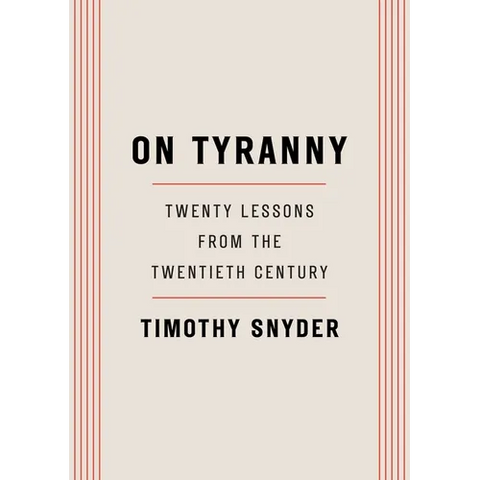
A Yale historian of Central and Eastern Europe distills the century's political catastrophes into twenty short, concrete lessons — do not obey in advance, defend institutions, believe in truth, be kind to our language. Under 130 pages, deliberately pocket-sized, and one of the most widely read political books of the last decade.
By
Steven Levitsky,
Daniel Ziblatt
Two Harvard political scientists examine the modern pattern of democratic collapse — which now happens far more often through elected leaders dismantling institutions from within than through coups. Their four warning signs for authoritarian behavior have become a standard analytical framework.
By
Anne Applebaum
A Pulitzer Prize-winning historian examines why so many of her own former colleagues and friends across Europe and America drifted toward authoritarian politics. Part analysis, part memoir, and unusually personal for a book on this subject — it's about the people who choose it, not the systems.
By
Timothy Snyder
Snyder's account of the relationship between Russian political thought, disinformation, and democratic decline in Europe and the United States. More argumentative and more contested than On Tyranny, and worth reading alongside critics of it.
Fascism in fiction
Novelists got to some of this before the historians did, and in a few cases with more precision. These are the imaginative accounts — several written while the actual events were still unfolding.
Published in 1935, and about a folksy, plain-talking senator who wins the American presidency promising a return to greatness, then dismantles the republic within months. Lewis wrote it as a direct warning to Americans convinced their institutions made them immune. Its reputation has fluctuated for ninety years depending on the decade.
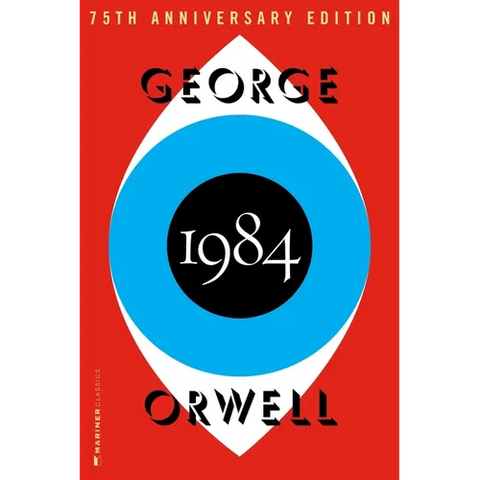
Surveillance, propaganda, and the deliberate corruption of language — the novel that supplied the vocabulary half of us use to discuss this subject at all. Orwell's real subject was the manipulation of truth itself, which has aged into something considerably sharper than a story about telescreens.
By
Arthur Koestler
An old Bolshevik is arrested by the revolution he helped create and interrogated into confessing to crimes he did not commit. Written in 1940 by a former communist, and the definitive novel of totalitarian logic — the process by which a person is argued out of their own reality.
By
Philip Roth
An alternate history in which Charles Lindbergh defeats Roosevelt in 1940 on an isolationist, antisemitic platform, told through the eyes of a Jewish family in Newark. Roth's focus is domestic and small-scale — what it feels like when the country you live in stops being the country you thought it was.
By
George Orwell
Not fiction, but it belongs beside it: Orwell's account of fighting against fascism in the Spanish Civil War, being shot through the throat, and then watching the anti-fascist coalition devour itself through political purges. Clear-eyed about the enemy and equally clear-eyed about his own side, which is what makes it durable.
The literature of refusal
Finally, the other half of the subject — the people who declined. This is the part of the historical record we'd argue is most worth reading, and the part least often assigned.
By
Vaclav Havel,
John Keane
Written in 1978 by a dissident playwright who would later become president of Czechoslovakia, and built around the image of a greengrocer who puts a regime slogan in his shop window because it's easier than not doing so. Havel's argument — that authoritarian systems run on ordinary people's routine, unenthusiastic participation, and that simply declining to participate is a genuine act of resistance — is among the most useful things ever written on the subject.
By
Inge Scholl
The story of the Munich student resistance group that distributed anti-Nazi leaflets in 1942 and 1943, written by the sister of Hans and Sophie Scholl, who were executed for it. Short, plain, and devastating.
By
Viktor E. Frankl
A psychiatrist's account of survival in the camps and the framework he built from it — centrally, that the last human freedom is the choice of one's own attitude in any given set of circumstances. One of the most widely read books of the last century, and the right note to end on.
Where to read next
If this subject interests you, our best books about World War II covers what happened when the movements described here reached their conclusion, and 20 western canon books includes several of the political texts this whole tradition argues with.
And if you think we've missed something important — particularly on the resistance side, which is chronically underread — tell us. We'd genuinely like to know.