

Sometimes you have to finish a book. It's assigned, it's for work, it's the one everyone in your field has read, or it's simply a book you've decided matters, and you're not willing to let it beat you. Whatever the reason, quitting isn't on the table — which means the useful question isn't whether to keep going. It's how.
Most advice on this is useless because it treats the problem as a willpower deficiency and prescribes discipline. Set a goal. Build a habit. Try harder. If that worked, you wouldn't be reading this. The actual problem is almost always one of three things: you don't have enough context to follow what's happening, you're reading in a way the book doesn't support, or you're trying to consume it in units too large to sustain. All three are fixable, and none of them require becoming a different person.
First, make sure it's actually worth finishing
Quick gut check before you invest the effort, because the techniques below work and it would be a shame to deploy them on a book that doesn't deserve them. If nothing external is forcing you to finish — no class, no client, no book club — then you're allowed to walk away, and we've made that whole argument elsewhere. What follows is for the books where stopping genuinely isn't an option, or where you've decided the reward is worth the work.
Front-load the context
This is the single biggest lever, and almost nobody uses it because it feels like cheating.
Most of the difficulty in a hard book isn't the ideas — it's disorientation. You don't know who these people are, what the stakes are, what argument is being built, or where any of it's going, so every page costs more effort than it should. Fifty pages of that and your brain starts declining the invitation.
So remove the disorientation before you start. Read the introduction, even if it's by a scholar and feels like homework. Read a plot summary. Read a review or two. For nonfiction, read the conclusion first — you're not reading it for suspense, you're reading it for the argument, and knowing where the argument lands makes every intermediate step easier to follow. For dense fiction, a character list or a family tree kept beside you is worth more than an hour of willpower.
People resist this because it feels like spoiling. It isn't. Nobody reads Moby-Dick for the twist. You are trading a small amount of surprise for a large amount of comprehension, and comprehension is what makes reading pleasurable in the first place.
Read it out of order
Books are bound in one sequence. That doesn't obligate you to consume them in it.
For nonfiction especially, skipping is a legitimate reading strategy rather than a moral failure. Read the chapters that matter to you, skim the ones that don't, and go back if the later material demands it. Most nonfiction books are one strong argument surrounded by supporting material of wildly varying quality, and the author's editor probably wanted it shorter too.
For fiction, the same permission applies to the slow stretch. If a novel has a hundred pages of whaling taxonomy or an extended digression on Napoleonic troop movements, skim it and keep going. You can always come back. What you cannot do is come back to a book you abandoned in frustration on page 210.
Change the format when you stall
If you're stuck, the problem might be the delivery mechanism rather than the text.
Audiobooks are the most underused tool here. Difficult prose often becomes far easier when someone competent reads it aloud — dense syntax, unfamiliar names, and long sentences are all problems the narrator solves for you. Running both at once, listening while following along in print, is particularly effective for material that keeps sliding off your brain.
It's also worth knowing that the research comparing comprehension across formats is much less lopsided than the internet suggests. Listening is not a lesser form of reading. If it's the difference between finishing and not, it isn't close.
Shrink the daily unit
"Read for an hour" is a terrible goal, because an hour of a book you're struggling with is an hour you'll find reasons to postpone. "Read ten pages" is a much better one — it's small enough that refusing feels absurd, and the sessions routinely run long once you're in.
Ten pages a day finishes a four-hundred-page book in under six weeks. Nobody who has read a difficult book remembers what pace they read it at. They just remember having read it.
The corollary: read the hard book first, before the day's other reading, not last. Willpower is highest early, and the hard book is the one that needs it. If you're saving it for bedtime, you're scheduling it for the moment you have the least capacity.
Read it with someone
The reason book clubs work isn't accountability, though that helps. It's that explaining something to another person forces you to actually process it — a well-documented effect in learning research, and the reason teaching a subject is the fastest way to learn it.
You don't need a formal group. One other person reading at roughly your pace, with an occasional conversation about where you both are, does most of the work. If nobody's available, talking to yourself about it in writing — a paragraph after each chapter about what happened and what you think it's doing — has a surprising amount of the same effect.
Mark it up
Underline, annotate, argue in the margins, dog-ear whatever you want. Books are tools, not relics, and a marked-up book is a book you were actually present for.
The practical benefit is that marginalia turn passive reading into active reading, which is the whole ballgame for retention. The secondary benefit is that a book you've argued with is a book you can return to years later and immediately recover your own thinking from. If the object matters to you and you can't bring yourself to write in it, sticky notes and a notebook work nearly as well.
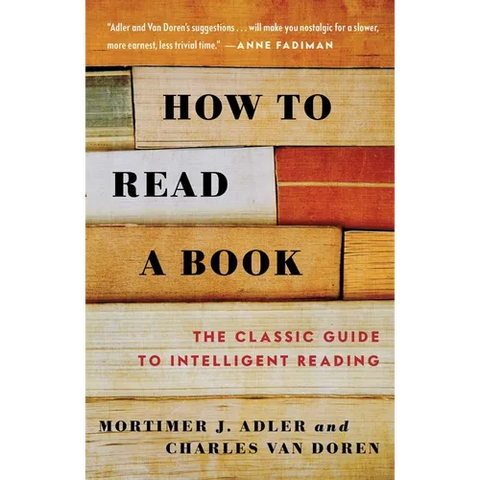
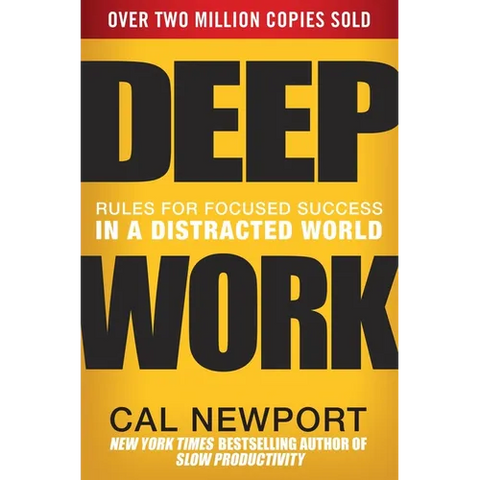
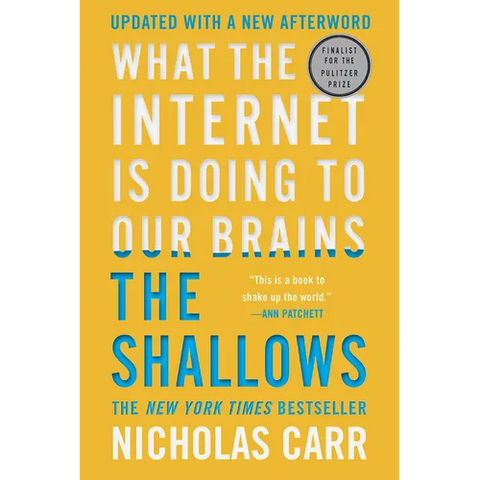
Books about reading better
If this is a recurring problem rather than a one-book problem, a few books that take reading seriously as a skill:
![How to Read Literature Like a Professor [Third Edition]: A Lively and Entertaining Guide to Understanding Literature, from the Great Gatsby to the Hat](http://blackandbarhe.com/cdn/shop/files/CtHe8W8HLD9780063307742.webp?v=1785524595&width=480)
Where to go from here
If the goal isn't just finishing but actually retaining what you read, our notes on getting the most out of reading cover the memory side of this. And if you've worked through this post and concluded the book genuinely isn't worth it after all, our case for abandoning books guilt-free is waiting, entirely without judgment.


