

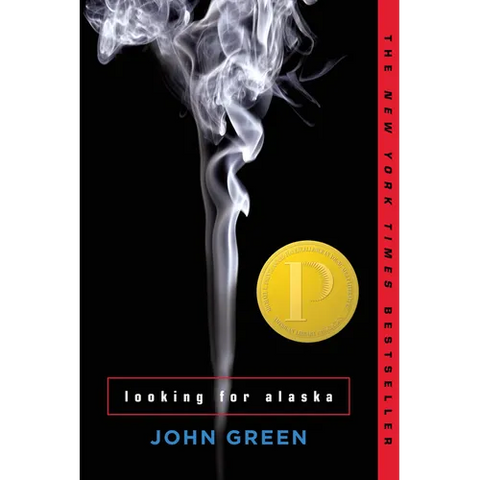
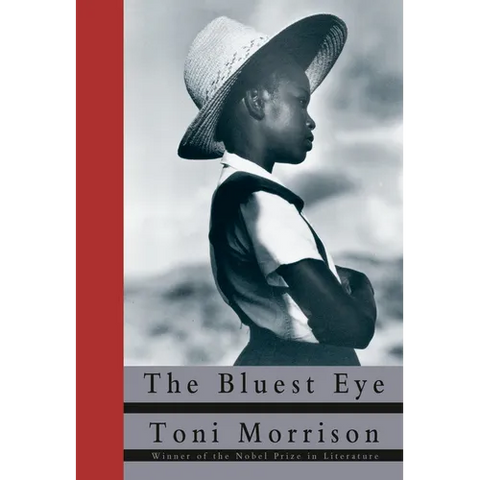
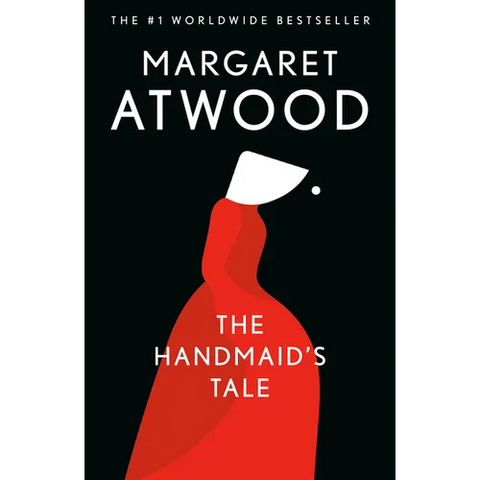
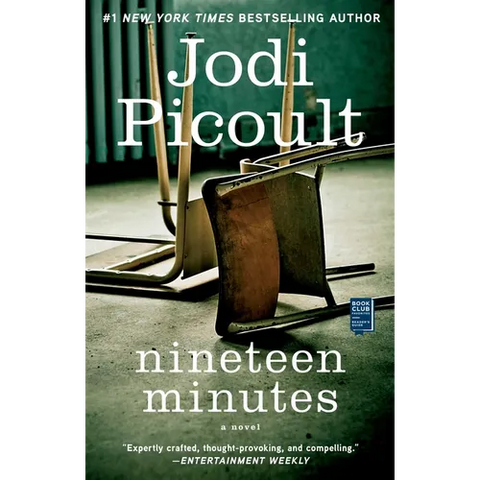
In the 2024–25 school year, PEN America counted 6,870 instances of books being banned in American public schools, across 23 states and 87 districts. Since 2021, the running total is close to 23,000 across 45 states. The most-banned title of the last four years is Looking for Alaska — a John Green novel about grief and boarding school. Also near the top: Jodi Picoult's Nineteen Minutes, Toni Morrison, Margaret Atwood, Judy Blume, and Sarah J. Maas, whose romantasy novels are currently among the most-challenged books in the country.
Whatever you expected that list to look like, it probably wasn't that.
This is a subject where nearly everyone has a position and almost nobody has the mechanics, so let's do the mechanics first: what a ban actually is, who has the authority to impose one, where the law draws its lines, and — the part most writing on this ducks entirely — whether there is ever a legitimate reason to keep a book off a shelf. There is. It's narrower than the people currently doing the banning would like, and broader than a purist would admit.
What is a book ban?
A book ban is the removal or restriction of a book from a library, classroom, or reading list where it was previously available, usually after a formal challenge. That last part matters: a ban takes something away.
Which means the most important distinction in this entire debate is the one between banning and curating.
Every library and every bookshop makes choices. We don't stock everything; nobody does. A children's librarian who puts picture books in one section and adult fiction in another isn't censoring anyone — she's doing her job. A middle school library that doesn't carry American Psycho hasn't banned it. Selecting for an audience is not suppression, and any argument that pretends otherwise isn't worth having.
Banning is different in kind. It's the removal of a book that was already there, in response to objection, usually to prevent other people's children from encountering an idea. The book existed on the shelf; someone complained; it's gone. That's the thing this post is about, and conflating it with ordinary curation is the central rhetorical move of the movement doing it. "We're just being age-appropriate" is doing a great deal of work in a year when the most-banned book in America is a Printz Award-winning novel about a teenager processing a friend's death.
Who actually decides?
Most Americans picture book banning as something a government does at the national level. In the United States, it almost never is.
Bans happen at the school district level. A parent, a board member, or an advocacy group files a challenge. A review committee — sometimes — evaluates it. A school board votes. In the four years PEN America has tracked this, more than 450 districts have removed books. Florida leads with 2,304 instances in a single year, followed by Texas at 1,781 and Tennessee at 1,622.
Three things have changed recently, and they're worth knowing about because they're what makes the current wave different from previous ones:
Statewide "no read" lists. Utah and South Carolina have enacted mechanisms that remove specific titles from every state-funded school at once. Tennessee has passed one too. This is new — a single decision now clears shelves across an entire state.
"Do not buy" lists. Some districts now issue lists preventing librarians from acquiring titles in the first place. This is quieter than a ban and harder to track, because nothing visibly disappears.
Preemptive removal. Districts increasingly pull books first and review later — or never. Books have sat in boxes for entire school years awaiting a committee that never convened.
And a fourth trend, from PEN America's Spring 2026 research: nonfiction bans have roughly doubled, hitting history, health, biography, and general knowledge titles. Their researchers describe this as a turn toward outright anti-intellectualism, and it's difficult to characterize it otherwise when the target moves from novels to books about things that demonstrably happened.
What does the law actually say?
The controlling case is Board of Education, Island Trees Union Free School District v. Pico (1982). A New York school board had removed eleven books — including Vonnegut's Slaughterhouse-Five and a Langston Hughes anthology — calling them "anti-American, anti-Christian, anti-Semitic and just plain filthy." Five students sued. The Court, badly split, ruled for the students.
The holding is narrower than people assume, and the part that matters is this: motive is the test. A school board may not remove books because it dislikes the ideas in them — that's what Justice Brennan called "the official suppression of ideas." But a board can remove a book for a genuinely neutral reason: it's pervasively vulgar, or educationally unsuitable.
Note what the Court explicitly did not touch: the discretion to choose what to add. Selection is free. Removal is what's constrained. Which is exactly the curation/banning line, written into constitutional law forty years ago.
The obvious weakness is that "educational unsuitability" is a phrase a motivated board can wrap around almost anything, and legal scholars have documented districts doing precisely that — reaching for the neutral-sounding justification while the record shows the actual objection was ideological. But the principle stands, and it's the right one: why you're removing a book determines whether you're allowed to.
So when is it right to keep a book off the shelf?
Here's where most writing on this goes soft, and we'd rather not. "Never ban any book" is a slogan, not a position. There are real limits. They're just not where the current fight is happening.
American law recognizes a short list of categories that get no First Amendment protection at all: obscenity, defamation, fraud, incitement, fighting words, true threats, speech integral to criminal conduct, and child sexual abuse material. The Court has been notably reluctant to add to that list — it has declined to carve out violent entertainment, for instance.
Look closely at what those categories have in common, because it's the thing that resolves this entire question:
None of them are about the danger of an idea. All of them are about a mechanism of harm outside the idea.
CSAM is the clearest case. It's unprotected not solely because its content is offensive but because its production requires the abuse of a real child — the material is the record of a crime, and the market for it drives more crime. The harm is complete before anyone reads anything. Same structure with incitement: Brandenburg requires speech directed at producing imminent lawless action and likely to produce it. Not "this argument could inspire violence eventually." Imminent, and likely, and directed.
Obscenity has a test too — Miller v. California — and the third prong is the one that matters here: the work must lack serious literary, artistic, political, or scientific value, considered as a whole. That prong is why virtually no novel in a school library is legally obscene, no matter how many times a board member reads one paragraph aloud at a meeting. "As a whole" is not decoration. It's the entire safeguard.
So the honest version of the line looks like this:
A book that argues for something monstrous is protected, and should be. Mein Kampf is in essentially every research library in the world, and that is correct. You cannot understand the twentieth century without the ability to read what its worst actors actually believed. A society that can't examine its own atrocities is not safer — it's less equipped. The answer to a bad argument has always been a better one, and the record on this is strong: banning a book has never once made its ideas less appealing.
A book whose existence is itself a crime against a person is a different object. Not an argument to be refuted — a harm already committed. This is the one genuine categorical exception, and it's genuinely categorical.
Operational instructions for imminent violence sit in the narrow, contested middle. Not a book that says violence is justified — a document that functions as a tool for a specific attack. Courts have handled this badly and inconsistently, and reasonable people disagree about where the boundary falls. Anyone who tells you this part is simple is selling something.
And "age-appropriate selection" is real. There's nothing sinister about a first-grade classroom library that skips Blood Meridian. Every parent gets to decide what their own child reads, and that's not censorship — that's parenting. The line is crossed at exactly the point where a parent decides what everyone else's child may read. One is authority over your own family. The other is authority over a community, exercised through a public institution, usually without the other families in the room.
The test, and what fails it
Put it together, and you get something usable. Before removing a book, ask:
- Is the objection to the mechanism, or to the message? Was a person harmed in making this, or does it function as a direct instrument of imminent violence? Or is the actual objection that it says something you'd rather people not encounter?
- Are you evaluating the work as a whole, or a passage out of context? Passage-hunting is not evaluation. It is the oldest trick in this fight.
- Are you removing, or declining to select? These are not the same act, and the law does not treat them the same.
- Whose children does this decision cover? Yours, or everyone's?
Now apply it to the actual list. Looking for Alaska. The Bluest Eye. The Handmaid's Tale. Nineteen Minutes. A Court of Thorns and Roses. The recurring themes in banned titles, year after year, are race, LGBTQ+ characters, and sexual content in books written for teenagers about being a teenager. Nobody was harmed producing them. None of them are operational instructions for anything. What they have in common is that a group of adults would prefer children not read about certain kinds of people existing.
That is not a mechanism of harm. That is a disagreement with a message, which is precisely and exactly what Pico says you're not allowed to act on.
The most banned books in America right now
Available here, as it happens.
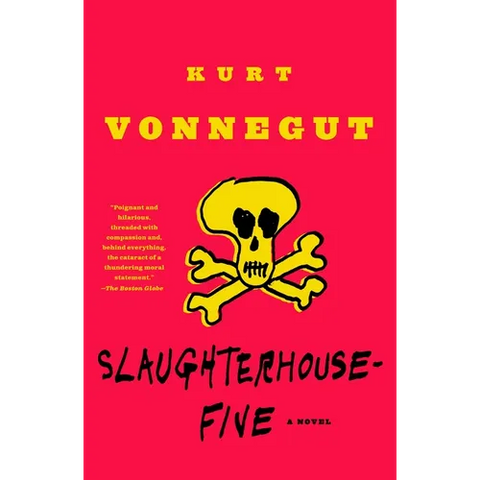
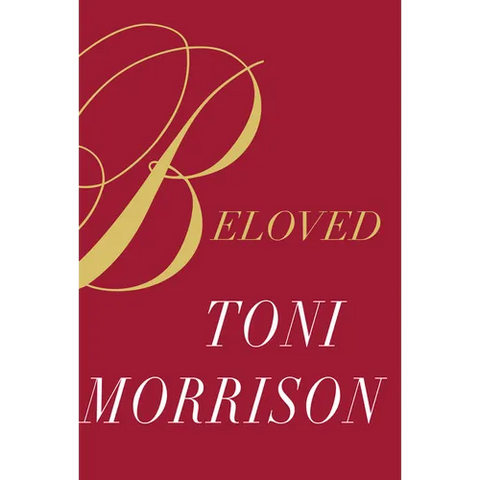
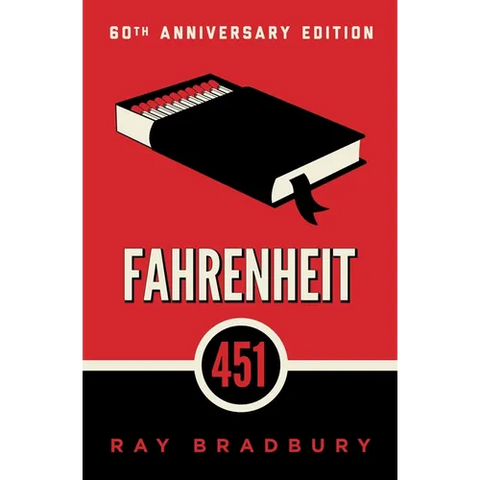
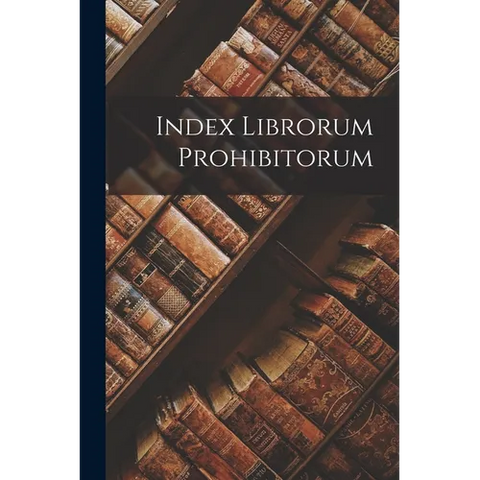
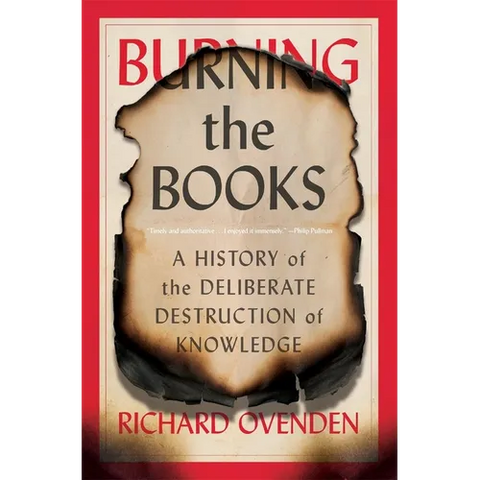
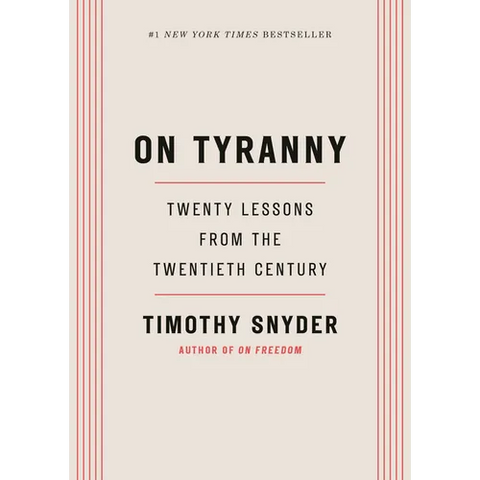
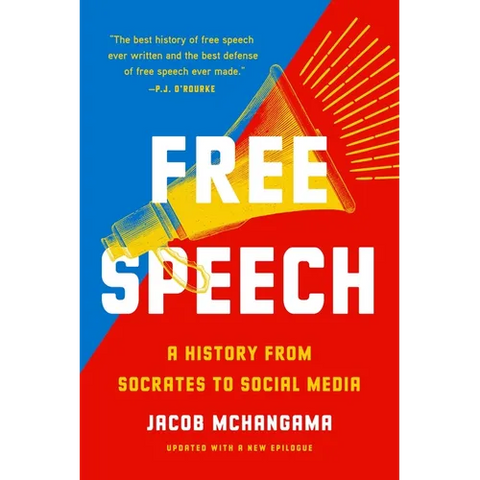
Books about censorship and the freedom to read
If you want to go deeper than a listicle on this, these are the ones we'd hand you.
What to actually do about it
School board meetings are public, sparsely attended, and decided by whoever bothers to show up. That's the whole mechanism. In district after district, a handful of organized people have moved thousands of books because the rest of the room was empty.
Beyond that: check what your own district has removed — PEN America and the American Library Association both publish searchable indexes. Support the library, which is the institution actually absorbing this pressure. And read the books, which remains the single most effective response available, and the one nobody can vote on.
We'll keep stocking them. That part isn't complicated.
Related reading
For the political machinery underneath all of this, our guide to 21 books that explain fascism covers how democracies get dismantled by people following the rules. And the best books about World War II covers what happened the last time a major state decided which books its citizens could have.


