

Americans used to eat a light breakfast. Coffee, juice, maybe a roll. Then in the 1920s the pork industry hired a public relations man named Edward Bernays, who did something clever: rather than advertise bacon, he wrote to his own physician asking whether a heavier breakfast might be healthier. The doctor agreed. Bernays then had the question put to some five thousand other physicians, collected the agreeable responses, and released the results as a medical finding. Newspapers ran it as news. Bacon and eggs became the American breakfast, and remains so a century later.
Notice what's missing from that story: a lie. The doctors genuinely held those views. The survey genuinely happened. Nobody was deceived about any specific fact. And yet the entire thing was engineered by a man being paid by the pork industry, and the public had no idea.
That's propaganda. Not the crude, obvious kind with jackboots and shouting — the effective kind, the kind that works, the kind you have almost certainly absorbed this week without noticing.
What is propaganda?
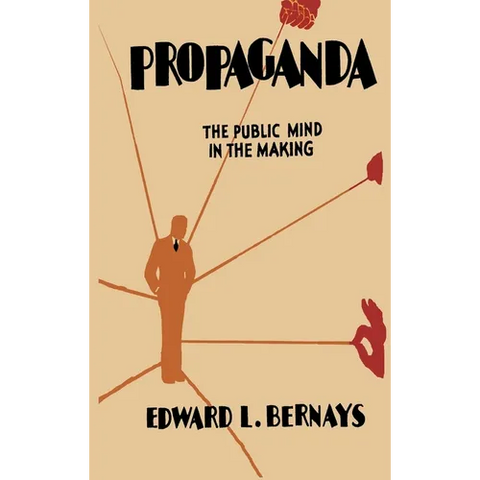
Bernays defined it himself, in a 1928 book he unapologetically titled Propaganda: a consistent, enduring effort to create or shape events in order to influence the public's relationship to an enterprise, idea, or group.
Two things about that definition are worth pausing on. It says nothing about truth or falsehood. And it emphasizes shaping events, not just describing them — manufacturing the thing that then gets reported.
Bernays knew exactly what he was doing. He'd worked for the Committee on Public Information, the US government's propaganda agency during the First World War, and came away convinced that ideas could be weapons. He was also Sigmund Freud's nephew twice over — his mother was Freud's sister, and his father's sister married Freud — and he applied his uncle's ideas about unconscious motivation to selling things. When the word "propaganda" acquired its stink in the 1930s, Bernays simply rebranded the field. He called it public relations. Same work, better packaging, which is itself the most elegant demonstration of the technique anyone has ever produced.
His other campaigns are worth knowing. In 1929 he got women smoking by staging a march in which debutantes lit cigarettes as "Torches of Freedom," attaching a product to a movement. In the 1950s he worked for the United Fruit Company on the campaign that accompanied the CIA-backed overthrow of Guatemala's democratically elected government. He lived to 103, and spent part of his old age working on anti-smoking campaigns after his own wife became addicted.
The first thing everyone gets wrong: propaganda isn't lying
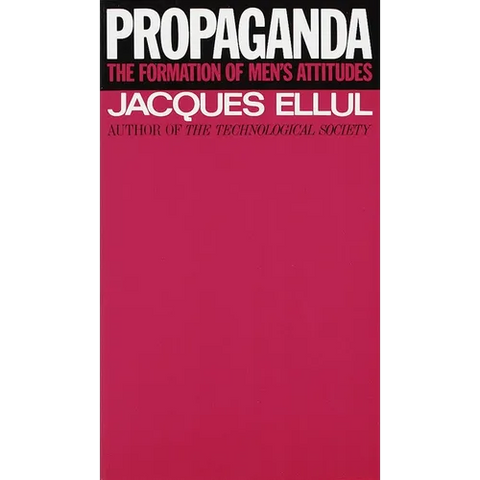
The French sociologist Jacques Ellul, whose 1965 book Propaganda remains the sharpest thing written on the subject, identified this as the fundamental error. People believe propaganda consists of lies, and therefore that anything true cannot be propaganda. That belief is precisely what makes them vulnerable.
Effective propaganda is usually true. It has to be — a lie can be checked, and getting caught destroys the effort. What propaganda does instead is select. It shows you real facts, accurately reported, chosen and arranged and repeated so that a particular conclusion feels like something you worked out yourself.
Every individual claim survives fact-checking. The overall impression is manufactured. This is why fact-checking, though valuable, is a weak defense: it operates at the level of the sentence, and propaganda operates at the level of the frame.
The second thing: it isn't mainly trying to change your mind
Ellul's other correction is that changing opinions is a minor, secondary goal. The main work of propaganda is to produce action, and more fundamentally, to produce a person who is easier to mobilize.
What it wants is not agreement but orientation — a settled sense of who is trustworthy, who is threatening, what sort of thing is happening, which direction the danger comes from. Someone with that framework installed doesn't need to be told what to think about a new event. They already know. Propaganda hands you a lens, not a conclusion, and lenses are much harder to notice than conclusions.
Ellul also described something he called pre-propaganda: the long, low-grade conditioning of a population with vast quantities of information that arrives faster than anyone can evaluate it. No particular message, no specific goal. Just the steady production of people who feel informed without being able to say how they know what they know. He was describing television. It is difficult to read now without thinking of something else.
The uncomfortable part
Here's the finding that ought to bother everyone reading this, including us.
Ellul argued that intellectuals are the most susceptible people to propaganda, not the least. His reasoning was threefold, and it's hard to escape:
- They consume the most secondhand, unverifiable information — vastly more than they could ever personally check.
- They feel obligated to hold an opinion on every significant issue, which means accepting ready-made positions on subjects they haven't studied.
- They believe themselves capable of judging independently, which removes the suspicion that would otherwise protect them.
His conclusion was blunt: educated people don't merely fall for propaganda, they require it. The demand to have a view on everything, combined with the impossibility of investigating everything, creates an appetite that propaganda exists to satisfy.
Which means the reader most confident that this post is about other people is the reader it's most about. That includes us writing it. There's no exit from that, and anyone selling one is doing the thing.
How to actually recognize it
Since the content can be true and the target is your framing rather than your conclusions, the useful questions are structural:
Who benefits if I believe this, and who paid for me to see it? The bacon study was real. The pork industry commissioned it. Both facts matter, and only one was disclosed.
What's being left out? Selection is the primary tool. Ask what facts would complicate this if they were included — and whether you'd have any way of knowing they existed.
Is this asking me to think, or to feel oriented? Material that leaves you with a strong sense of who the good and bad actors are, without much new information, has done propaganda's actual job.
Is disagreement being treated as a position or as a symptom? When dissent is explained away — as corruption, stupidity, brainwashing, bad faith — rather than argued with, that's a reliable tell. It's the move that makes a framework unfalsifiable.
Am I being flattered? Propaganda that works usually tells its audience they're the perceptive ones who see clearly. Being told you're among the few who understand is an unusually effective way to stop someone from checking.
The test only counts when it hurts
Ellul's book examines Communist, Nazi, and democratic propaganda together, and finds the same mechanisms in all three. That was the point of the exercise. A theory of propaganda that only detects it in your opponents isn't a theory, it's a weapon — and using the word as an insult for "arguments I dislike" is how it got hollowed out in the first place.
So the test is only worth anything when you run it on material you agree with. When something confirms what you already believe, and you feel that small satisfying click of vindication — that's the moment to ask who assembled it, what got left out, and whether you'd have noticed if it were wrong.
Usually the answer is that it holds up fine. Occasionally it doesn't. The people worth listening to are the ones who go looking.
The foundational books on propaganda
These are the ones that actually built the field, including the manual written by the man who invented it.
The modern era
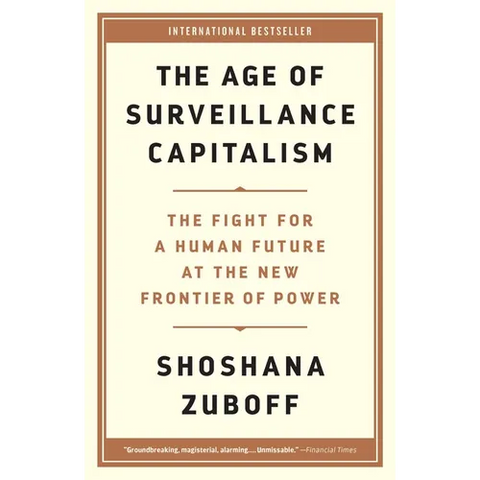
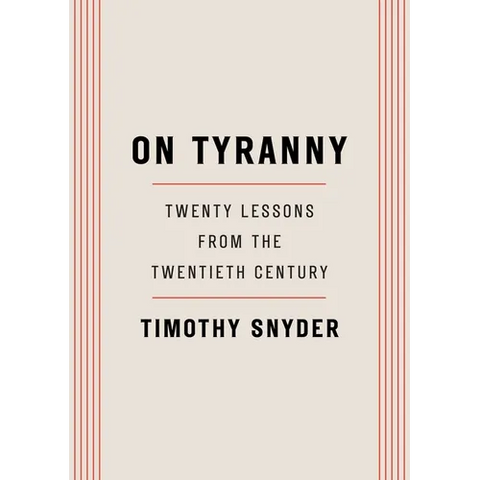
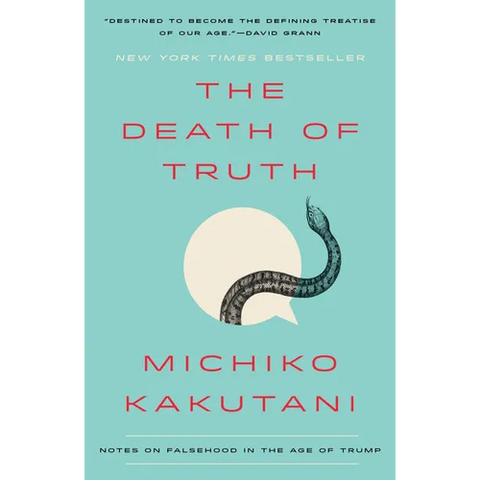
And for how all of this operates now, when the distribution system is algorithmic and the volume is effectively infinite.
Related reading
This post is the companion to our guide to 21 books that explain fascism, which covers what tends to be built once a population has been oriented. For the version of this problem inside publishing itself, see who actually owns what you read. And for what happens when someone decides which books you shouldn't have at all, our piece on book bans.


